A Reason You Can Assess
Ask what finding supports replacement and whether a serviceable part could address the complaint. Age is useful context; it does not identify the leak source or failed component.
Replace a failed heater with equipment that fits your home and hot-water needs. Review the diagnosis, sizing, removal, connections and completion checks before approving the installation.
A confirmed leak through a storage tank generally calls for replacement. A leaking fitting, faulty valve or failed heating component may be repairable when the heater remains suitable to use. For a planned upgrade, compare condition, repair scope, household demand and installation requirements before choosing the new equipment.
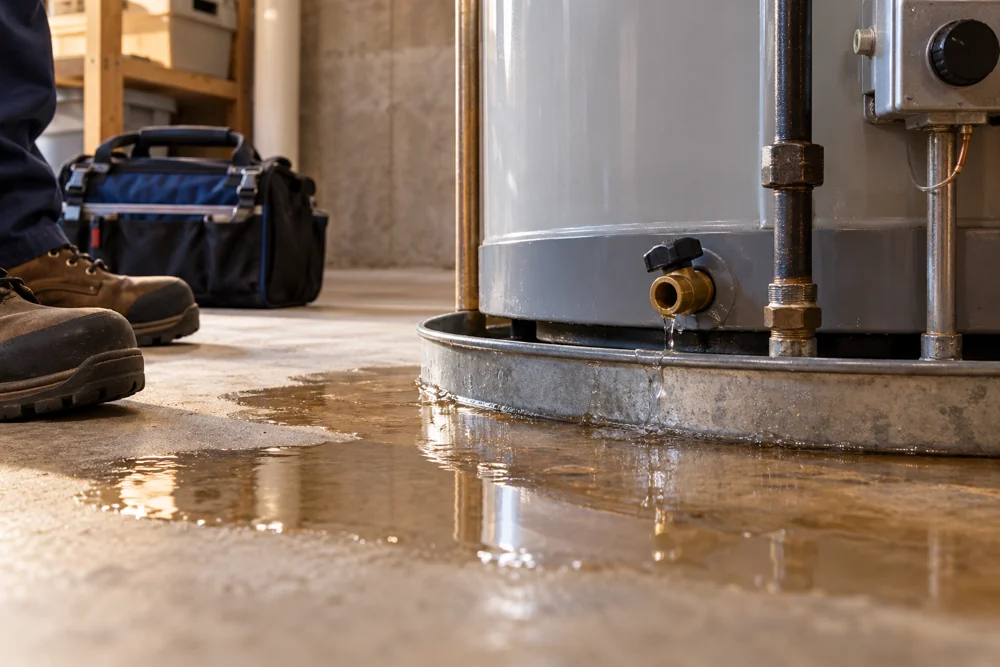
A puddle beside the heater does not establish that the storage vessel has failed. For an uncertain source, start with water heater leak detection before committing to a replacement.
Understand what is being replaced, why it is needed and what the completed work includes.
Ask what finding supports replacement and whether a serviceable part could address the complaint. Age is useful context; it does not identify the leak source or failed component.
Describe the busiest hot-water period, fixtures and changes in household demand. The old capacity is a starting detail, not the complete sizing decision.
Compare the heater, removal, labor and required connection changes together. Clarify gas, vent, electrical, drainage and pressure-control work where applicable.
Keep the installed model, serial number, work record and warranty terms. Ask which operating and connection checks were completed and who handles a returning issue.
Already been told you need a new heater? Have the diagnosis and existing model ready. Ask what the replacement quote includes and why that equipment was selected.
Discuss Heater ReplacementCompare the installed result, not just the purchase price of the new unit.
The right proposal connects the condition found with the equipment and work being recommended.
Ask where the storage vessel is leaking and what ruled out nearby fittings, a drain valve or relief discharge. A tank failure and an external connection repair are different findings.
Collect earlier invoices and explain the returning symptoms. Compare the new repair proposal, overall condition and replacement scope rather than replacing on frustration alone.
Mention additional occupants, changed shower use or new fixtures. Also establish whether a recent performance drop is a repairable fault before assuming the tank is undersized.
An advance replacement can allow time to compare equipment and access requirements. Discuss the existing heater’s condition and your priorities without assuming a fixed failure age.
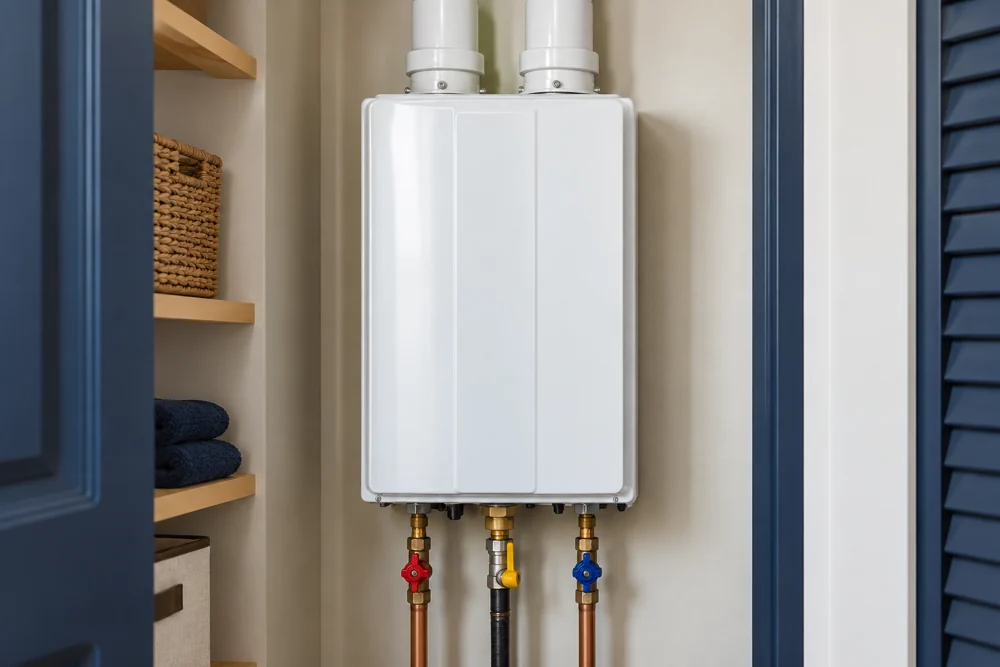
A switch to tankless or heat-pump equipment can change supply, space, venting or drainage needs. It requires its own installation assessment.
Report narrow stairs, doorways, overhead pipes and the available service space. The old heater getting in years ago does not prove the proposed model will fit now.
Fuel, hot-water demand, available space and installation changes all affect the decision.
| Replacement Type | What To Compare | Installation Questions |
|---|---|---|
| Gas Storage | A replacement using the existing fuel may be worth comparing. | Fuel supply, vent compatibility, combustion air, capacity and physical fit. |
| Electric Resistance Storage | An electric tank may suit the available space and supply. | Rated electrical circuit, delivery rating, dimensions and connection arrangement. |
| Heat-Pump Storage | Consider it where the installation location supports the selected model. | Air and space requirements, operating environment, sound, condensate and electrical needs. |
| Tankless | Compare delivery during simultaneous fixture use rather than storage volume. | Design flow and temperature rise, supply capability, service access and model-specific venting or drainage. |
No heater type is automatically the best fit for every home. Ask for a model-specific proposal. Reference: PNNL’s heat-pump installation and sizing guide.
Start with the hot water your household needs during its busiest period, then compare the selected model’s delivery capability.
For storage heaters, first-hour rating describes delivery over an hour starting with a fully heated tank. Two units with the same tank volume can have different delivery performance.
The required flow and temperature rise matter. Tell the provider which showers and appliances run together. A tankless unit does not provide unlimited simultaneous hot water.
Ask for the sizing explanation with the proposed model. Discuss physical dimensions, access and the installation environment separately from hot-water delivery.
A complete estimate identifies required connection and installation work before it becomes an unexpected extra.
Review the supply connections, shutoff condition and any piping changes. Ask which existing components are suitable to reuse and which replacements are included in the quote.
The new model must suit its actual supply and installation requirements. A different fuel, input or vent arrangement can add work; do not assume the old connections can simply be moved over.
Discuss the selected model’s safety-valve discharge and the proposed pan or drainage arrangement. A pan alone does not guarantee protection from every future leak.
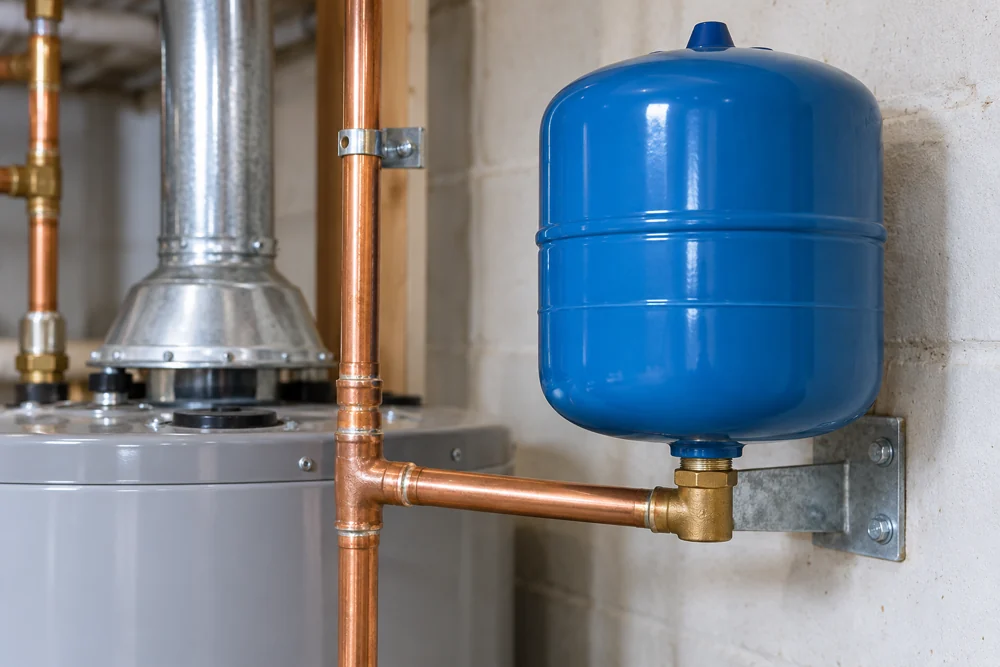
Ask whether supply pressure or the expansion-control arrangement needs attention. If additional equipment is proposed, the scope should explain the finding, selection and setup.
Related work: expansion-tank assessment and pressure-relief valve service. The installer should follow the actual heater and component instructions.
The quote and completion record should connect the selected equipment with the work performed.
Describe the leak or replacement reason, existing equipment and property access. The provider assesses the installation and whether the proposed change suits the home.
Review delivery, fit, supply requirements, removal, additional work, price and applicable permit or inspection responsibility. Clarify any model substitution before it is installed.
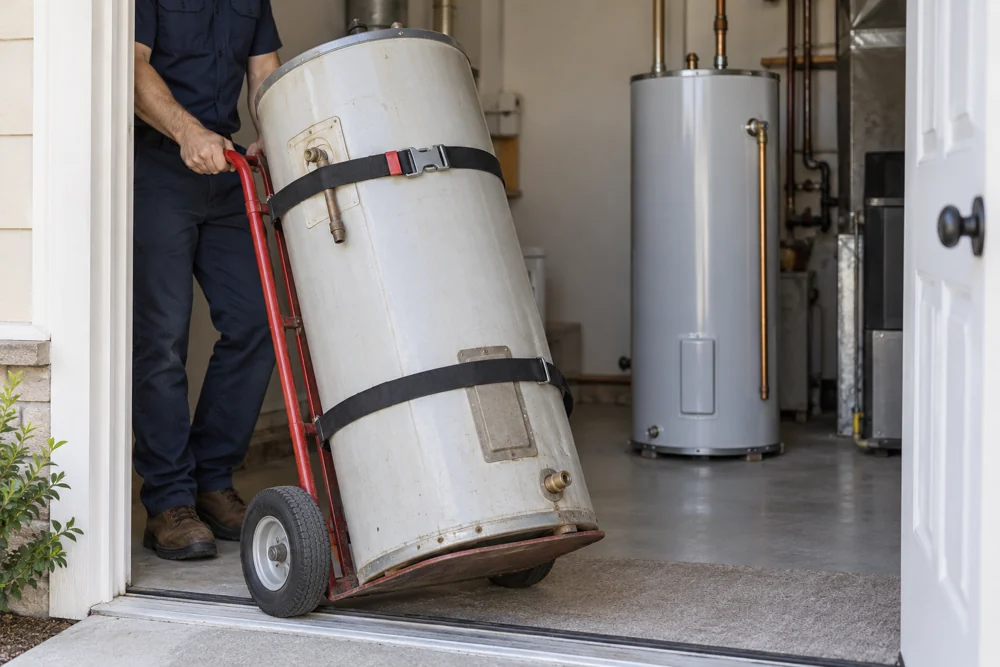
The technician follows the required isolation, removal, connection and installation procedures. Confirm haul-away and how the work area and access route will be handled.
Ask which filling, connection and operating checks were completed. Keep the model and work documents, understand the controls and agree on the maintenance and follow-up contact.
Compare the complete scope, equipment condition and expected hot-water needs.
If the tank and equipment are suitable to retain, a component repair may address the problem. Ask for the actual finding and the repair price before choosing replacement.
A similar fuel and heater type may limit some changes, but dimensions, connections and model instructions still need checking. It is not automatically a direct exchange.
Review Replacement Scope →Tankless, heat-pump or fuel changes may require a different installation plan. Compare equipment, connection changes, operating conditions and service access together.
Compare Heater Types →A repairable fitting leak and a failed tank should not lead to the same recommendation without an explained assessment. A. O. Smith discusses repair and replacement considerations.
A planned swap, a failed gas tank and an unexpected Friday breakdown each led to a replacement tailored to the household.
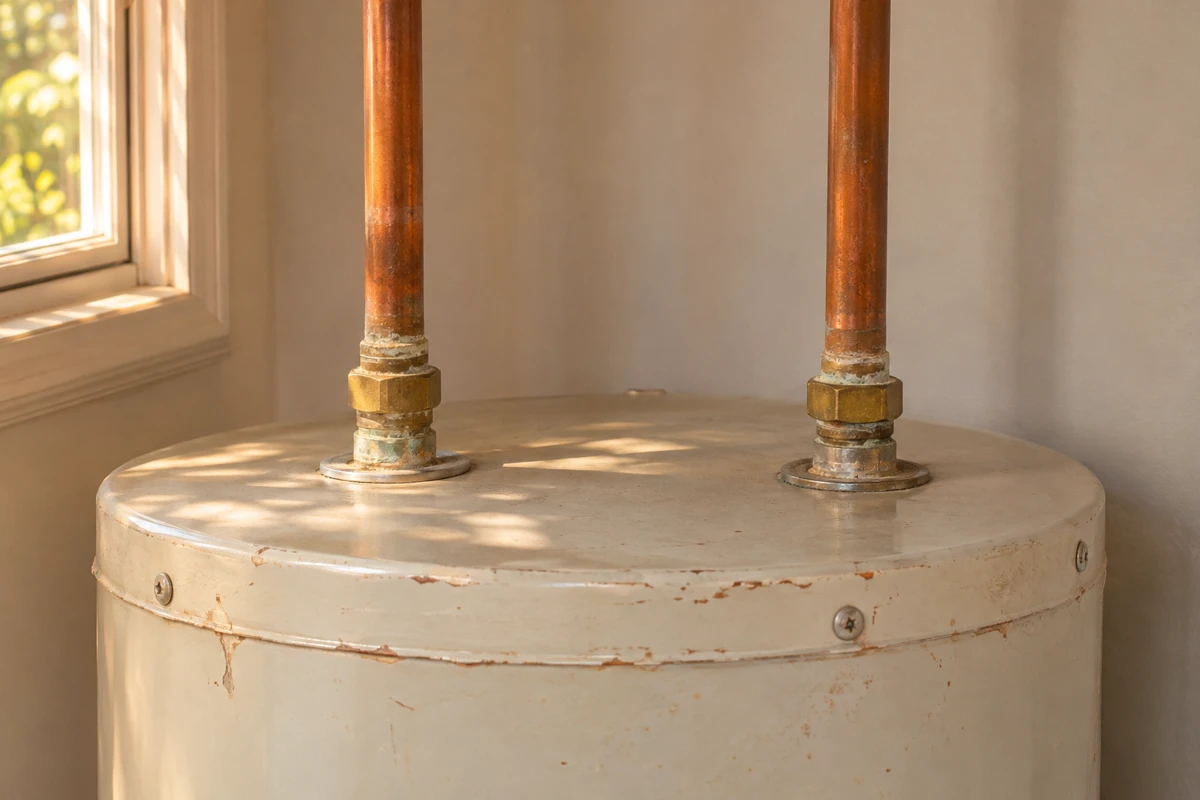
The 12-year-old tank was replaced before it failed. The family’s growing hot-water needs were part of selecting the new equipment.
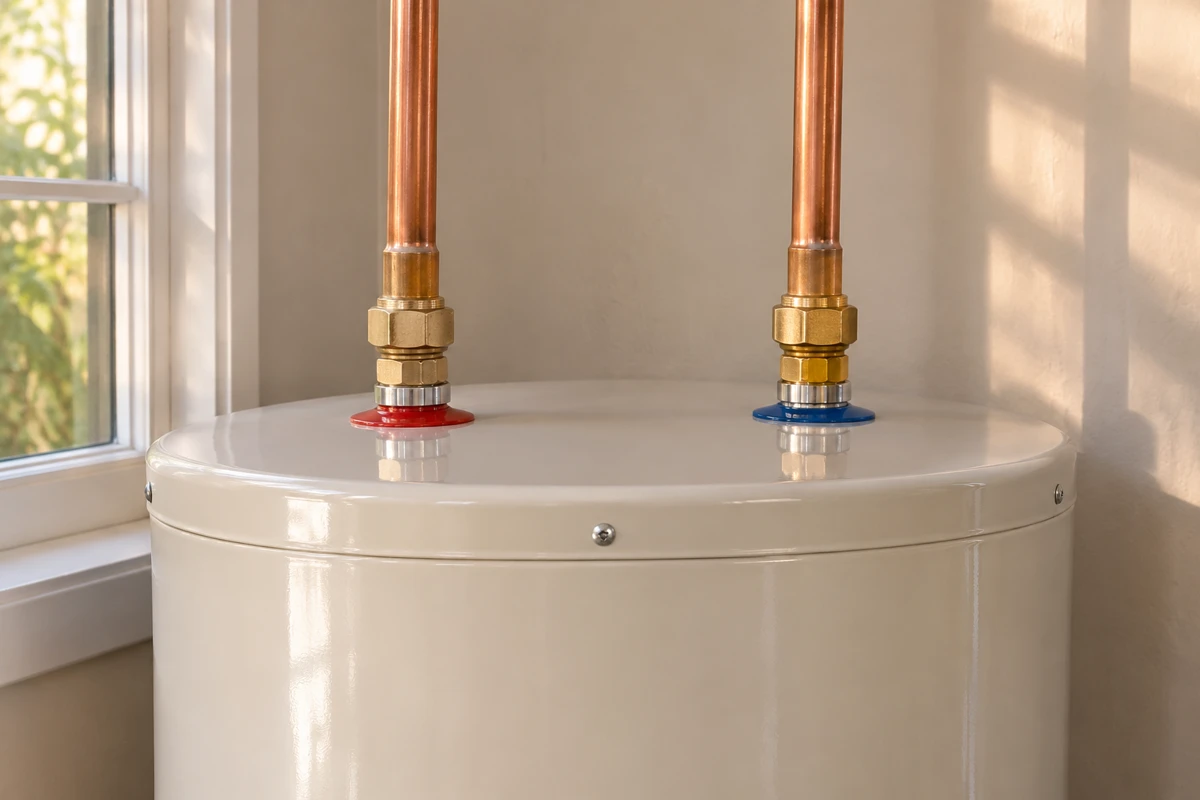
The planned tank swap was completed in a morning. The replacement was sized for the household and tested under use before the job was finished.
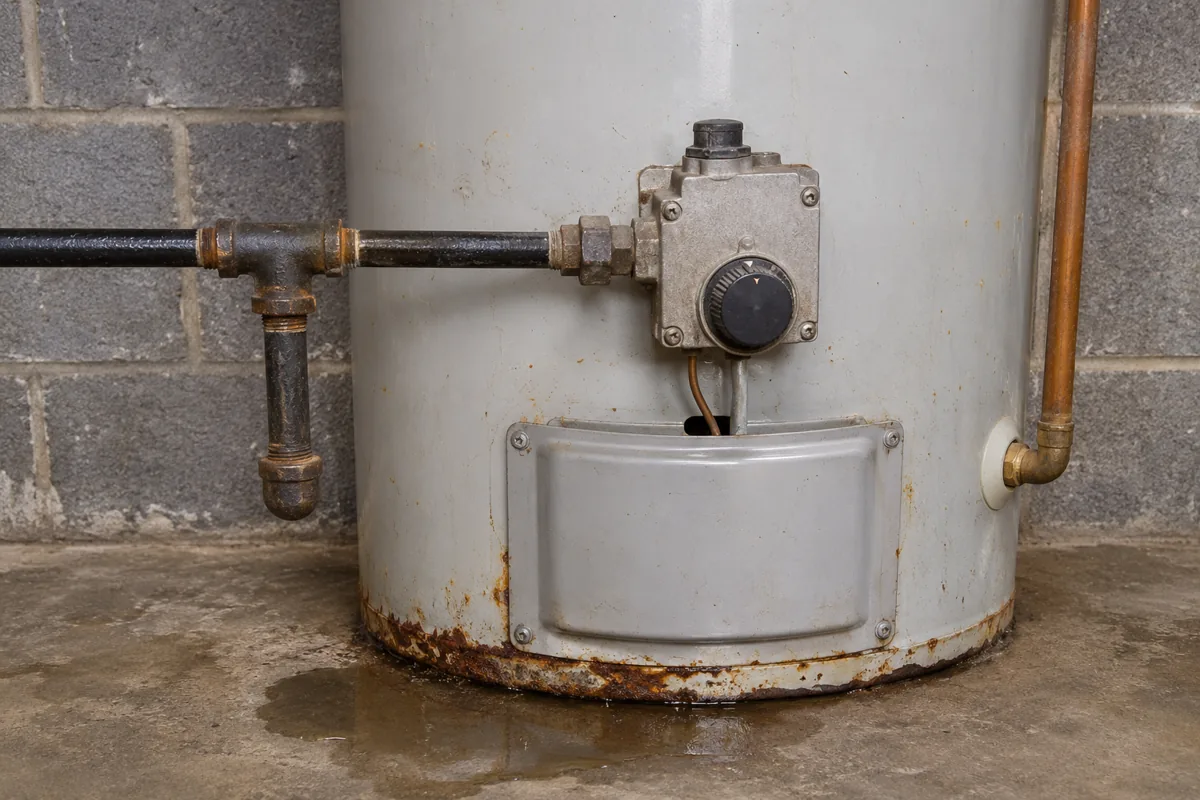
The 16-year-old gas heater was past a safe repair. A connection adjustment or cleaning service could not resolve the failed storage vessel.
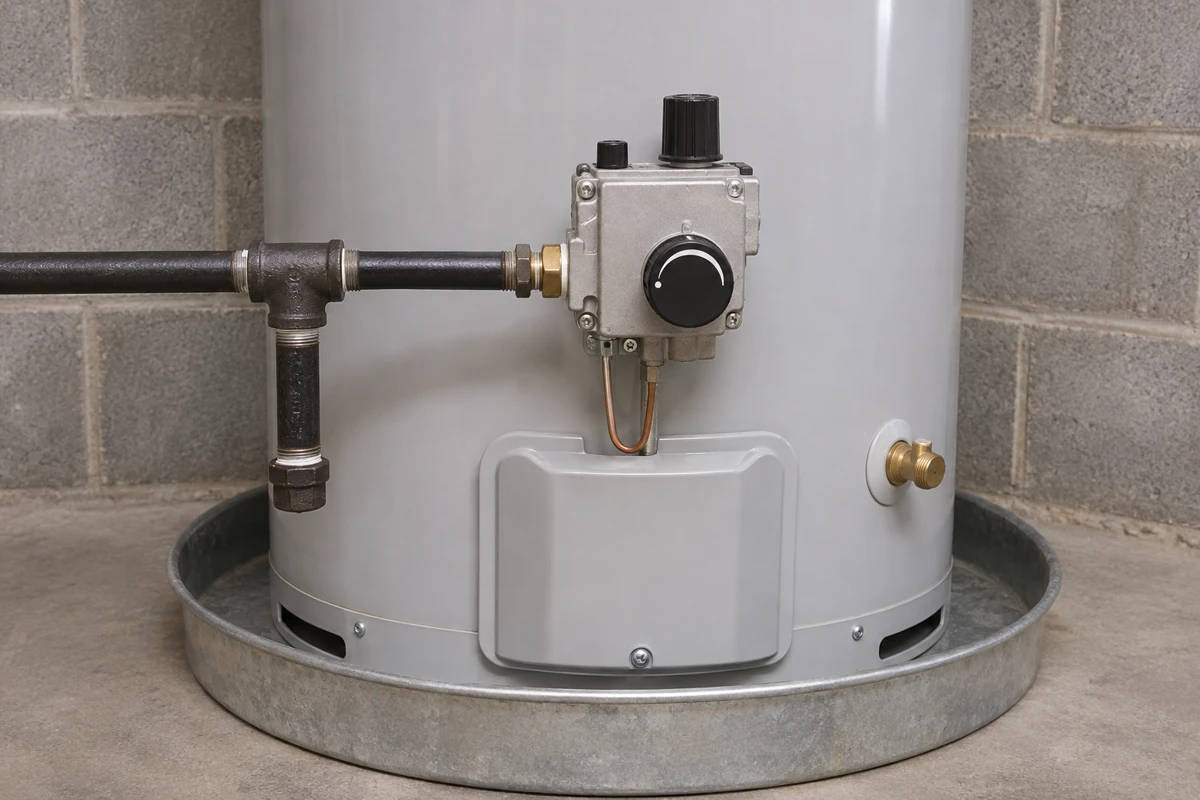
The old unit was removed and hauled away. A correctly sized replacement was installed the same day with a fresh drain pan and expansion tank. Hot water returned that afternoon.
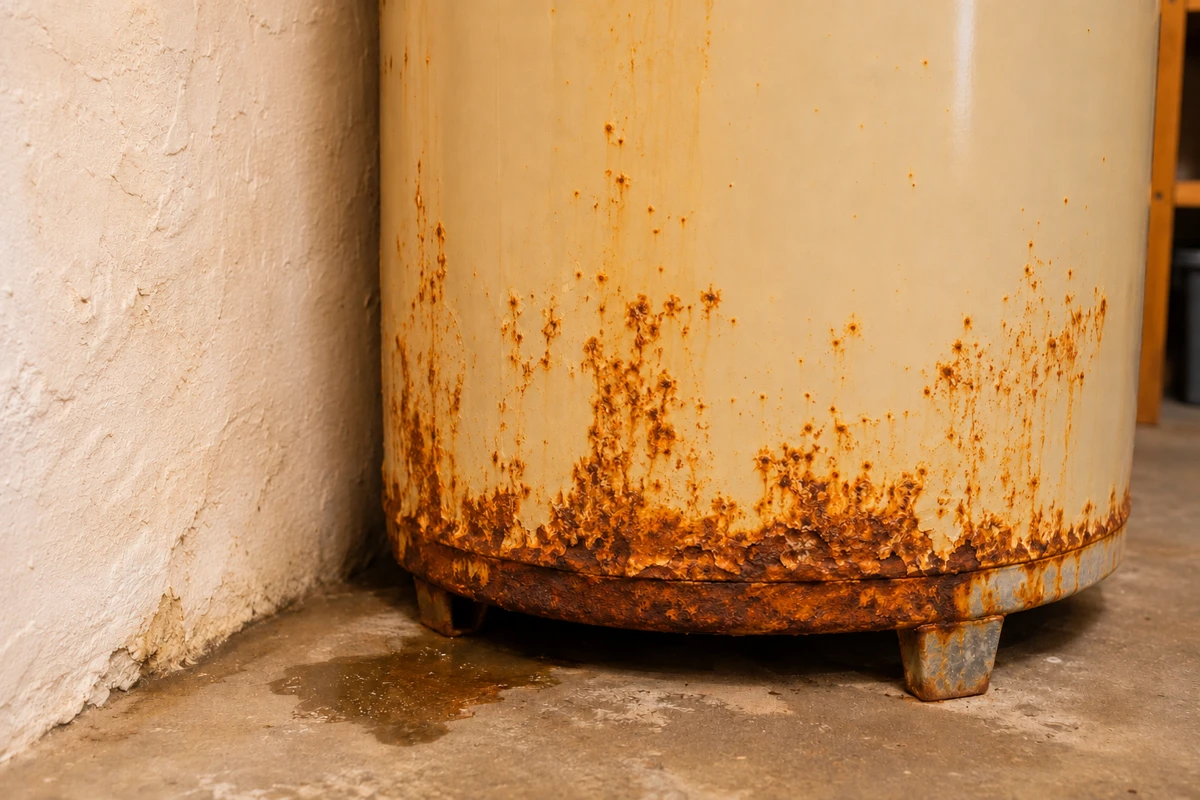
The tank failed on a Friday while family were visiting. The household needed a suitable replacement and a clear plan to restore hot-water use.
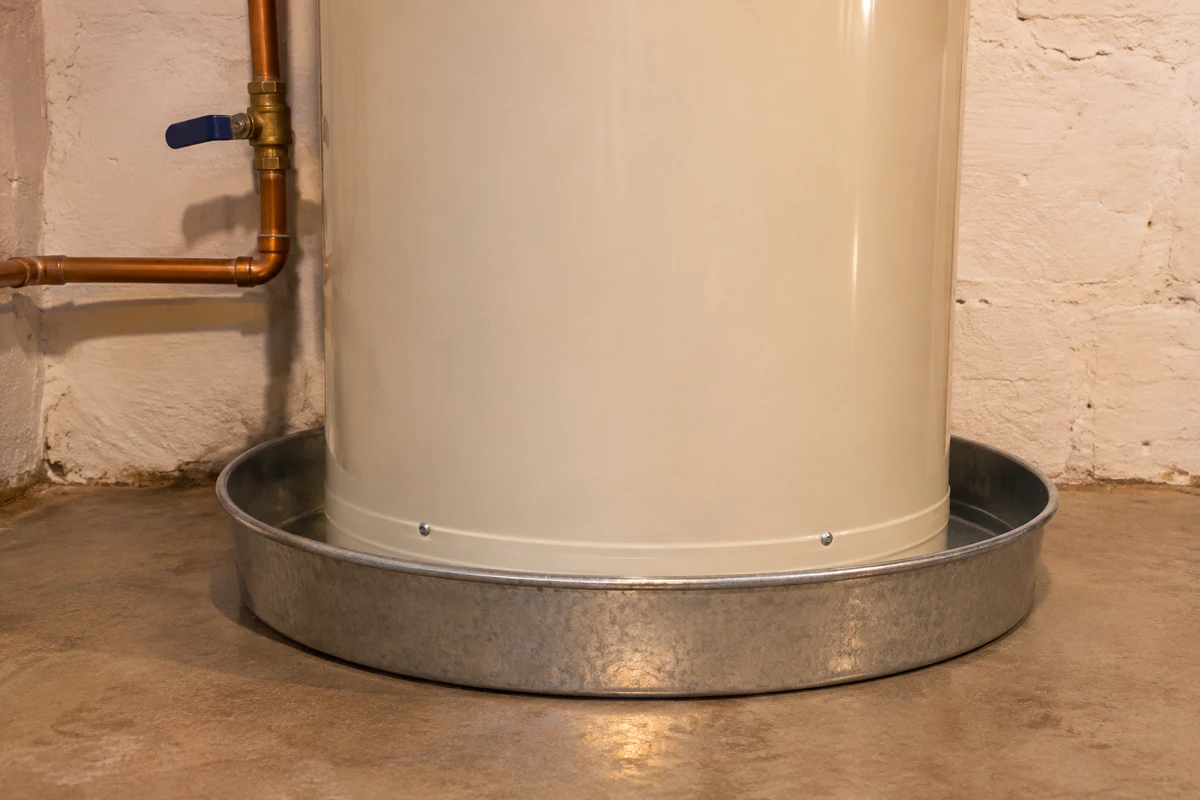
A replacement size was selected for the home and the new heater was installed. Hot showers were available again that night, and the old tank was taken away.
Planning ahead or dealing with a failed tank? Explain which applies, give your address and ask about equipment selection, availability and the complete replacement scope.
Discuss A Replacement RequestA clearly named model and complete scope are more useful than an unexplained tank-swap price.
Two quotes are easier to compare when both name the heater model, removal, labor, connection changes and completion checks. Ask which work is excluded and how an additional finding will be approved.
Request the manufacturer warranty and labor terms separately. Clarify registration responsibility and who handles a problem after installation. A warranty length does not promise that every visit or installation expense is covered.
The EnergyGuide label’s operating cost is an estimate, not your future bill. Compare the proposed equipment alongside your actual utility rates, use and the full installation cost.
Reference: the FTC explains EnergyGuide estimates.
Accurate equipment, demand and access details make the first conversation useful.
Give the provider the details that affect equipment selection, access and scheduling.
The attending provider confirms coverage and scheduling for the individual property.
The selected model, labor, removal, access and required connection changes affect the installed price. A new pan, expansion equipment, vent alteration, electrical work or conversion to another heater type can change the scope. Ask which items and applicable fees are included.
For a Kokomo basement, garage or utility closet, discuss known flood or freeze exposure and the installation environment. A heat-pump option needs a suitable location, and a tankless proposal needs a sizing assessment for expected conditions. Do not assume every local home needs the same model.
A useful handover includes operating information, completed checks and a clear follow-up contact.
Keep the model, serial number, invoice and warranty documents. Ask the provider to explain the controls, any model-specific operating modes and the maintenance plan.
Confirm which filling, connection and operating checks were completed and whether any required follow-up remains. An electric tank must be appropriately filled before its heating elements are energized.
Ask when the particular heater is expected to deliver hot water after startup. A new tank starting with cold water does not provide a full hot supply immediately. Report an unexplained leak, shutdown or continuing delivery problem to the attending company.
Answers about leaks, sizing, heater types, removal, installation scope and quotes.
No. A connection, drain valve or relief discharge can leave water near a serviceable heater. A confirmed leak through the storage vessel generally calls for replacement. Ask where the water starts and what finding supports the recommendation.
Age informs the discussion but does not identify a fault. Review the actual condition, repair history, proposed work, warranty and household needs. A planned replacement can be discussed without treating a particular birthday as proof of failure.
It is a starting point, not the complete sizing decision. Consider current demand, the model’s delivery rating and the physical installation. A similar tank volume does not establish identical hot-water performance.
For a storage heater, it describes how much hot water the unit can supply over an hour starting with a fully heated tank. Use it alongside the household’s busiest hot-water period when discussing size and model selection.
Not automatically. Review the selected model’s space, air, environmental, sound, condensate and electrical requirements. The installation location and hot-water demand need assessment before assuming that the existing arrangement is suitable.
Sometimes, if the complete installation and supply requirements can be met. The proposal should address design flow, temperature rise, fuel or electrical capability, service access and model-specific venting or drainage. Compare the full conversion scope.
Confirm it on the quote. Draining, removal, access-route handling, haul-away and disposal should be explained. Do not assume the appliance purchase price includes those tasks.
Only if they suit the selected model and applicable installation requirements. Ask which components will be reused, which need changing and why. A similar fuel or tank size does not prove every existing connection is suitable.
The provider should assess the actual installation and explain the required scope. A pressure or expansion-control finding, pan condition and drainage arrangement may affect the proposal. Ask which equipment is included and how it will be selected and installed.
Confirm the requirements for the exact property and work with the attending provider and relevant local authority. Ask who applies, pays applicable fees and coordinates inspection. A mailing address alone does not establish jurisdiction or the project requirements.
No appointment or completion time is guaranteed here. The attending provider confirms availability, equipment stock, access and required work. Describe an active leak or complete loss of hot water when requesting the earliest suitable assessment.
It depends on the selected equipment, starting water conditions and startup requirements. Ask for the expected timing for your installation. A storage tank filled with cold water needs time to heat; a tankless unit also needs its required commissioning checks.
The estimate depends on the model, installation labor, removal, access and connection or conversion work. Request an itemized installed scope, including applicable fees and exclusions, and approve changes before additional work is carried out.
No specific saving or service life is guaranteed here. Compare the equipment and EnergyGuide information with your use and utility rates. Installation, operating conditions and maintenance all matter; clarify manufacturer warranty and labor coverage separately.
Technical References · Use the actual model’s instructions and confirm current project requirements with the relevant authority. These references do not replace the property assessment.
A. O. Smith: Repair Or ReplacementA. O. Smith: Leak SourcesPNNL: Sizing And Installation ConditionsFTC: Understanding EnergyGuide EstimatesNavien: Tankless Equipment And InstallationA. O. Smith: Filling Before HeatingKokomo: Published Department ResponsibilitiesCall with your address, current heater and replacement reason. Ask about assessment, equipment options, installed scope, fees and availability.
Call (765) 227-1552LeakRescue Pros provides water-heater information and service requests. The attending provider confirms coverage, capability, scheduling, pricing and work terms.