Questions before attendance
Emergency Water Heater Leak Repair FAQs
Answers about safe access, attendance, replacement, charges and what happens after the leak is controlled.
Can I request emergency water heater leak repair today?
Call with the address and current leak details, and ask the provider to confirm attendance and the expected arrival window. Availability depends on the address, workload and equipment. A service request does not guarantee same-day completion.
Do you offer 24-hour or overnight attendance?
Ask directly about the time you need help. This page does not establish round-the-clock attendance. Confirm whether someone can attend, any out-of-hours charges and what to do while the equipment remains out of service.
Should I shut off the water before calling?
Only if there is no gas emergency or electrical hazard, you know the relevant valve and can reach it safely from a dry position. Do not force a stuck valve or enter standing water to reach one. If access is unsafe or uncertain, keep clear and explain that when requesting help.
Why is water still leaking after the inlet is closed?
A storage heater still contains water after the incoming supply is closed. Another water source or incomplete isolation may also need investigation. Tell the provider what changed after the valve was closed; do not drain or dismantle the heater to test a theory.
Can I keep using hot water while it leaks?
Do not treat continued hot-water production as proof of safety. Ask for advice for the specific fault and model. Hot discharge, electrical exposure, gas concerns and flood exposure need particular attention before anyone considers continued operation.
Is a small leak less urgent than a large one?
The rate of leakage is only one factor. A small leak near electrical equipment or hot discharge can still be dangerous. Report the location, the water spread and nearby hazards so the situation can be assessed appropriately.
Does emergency repair always mean replacement?
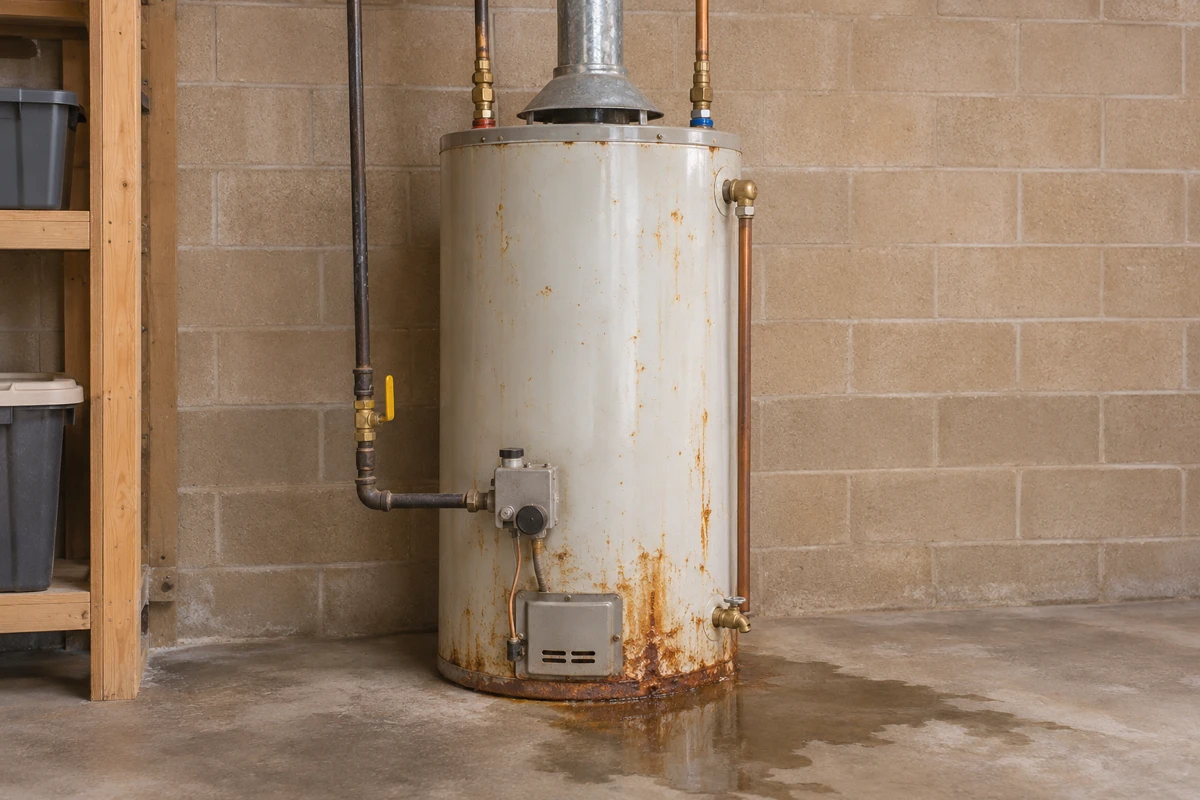
No. The decision depends on the source and condition. A failed connection or serviceable valve can lead to a targeted repair. A confirmed leak through the tank itself calls for replacement rather than a patch to the tank.
Can a dripping relief pipe be blocked temporarily?
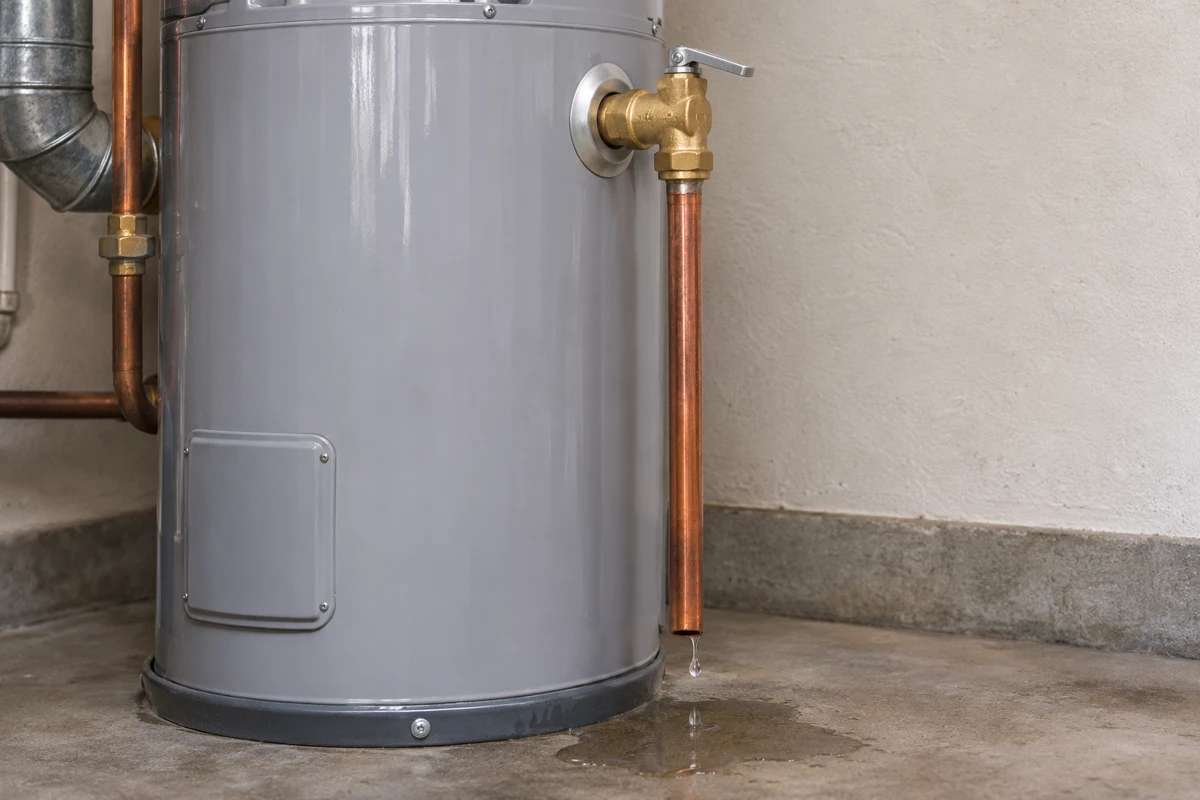
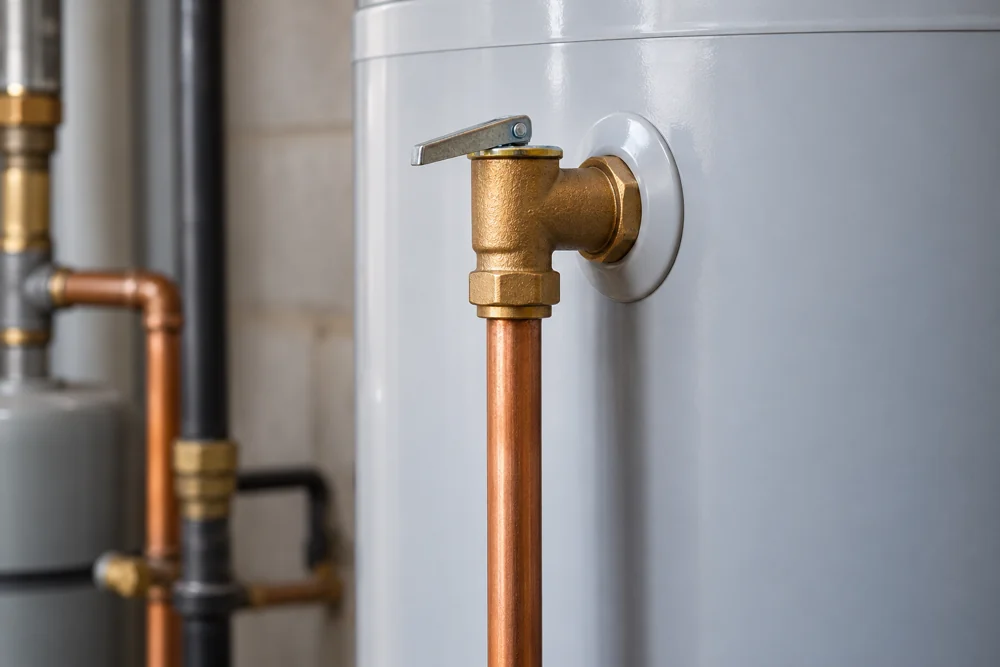
No. The temperature and pressure relief valve and its discharge path are safety features. Keep the outlet unobstructed and keep clear of hot discharge. The valve condition and reason for discharge need assessment.
Can a flooded water heater be restarted after it dries?
Do not restart equipment that has been under water. Flood exposure can cause concealed damage. Manufacturer guidance and a qualified assessment are needed; A. O. Smith advises replacement for flood-exposed or extensively inundated water heaters.
What if the leak starts after a recent installation?
Contact the installer, report the active leak and have the installation paperwork ready. Ask for the source to be identified and discuss the actual warranty terms. Do not assume either a defective tank or free labor before the finding and coverage are established.
Is water removal included in the repair?
Confirm this before booking. Leak control, water-heater repair, extraction and drying are different tasks. A plumbing provider may not handle restoration work, and affected walls or flooring may need a separate assessment.
What information helps with a replacement quote?
Have the model label and installation paperwork available if safely accessible. Describe the equipment location, stairs, closet dimensions and access restrictions. Ask what the proposed replacement scope includes, rather than comparing unit prices alone.
Can a tenant arrange an emergency visit?
Report the leak to the responsible landlord or property manager and explain any immediate danger. Confirm who authorizes attendance, access and charges. For gas odor or a CO alarm, leave and contact emergency services rather than waiting for routine work authorization.
How much does emergency water heater repair cost?
The price depends on the visit, fault, equipment, parts and access. Ask for the callout and diagnostic charges before attendance, then a written repair scope and price after assessment. Confirm any additional-visit, removal or replacement charges before approving them.