One problem, clearly described
Start with the wet spot, the timing and the equipment. You do not need to know a part name or buy a new heater before requesting help.
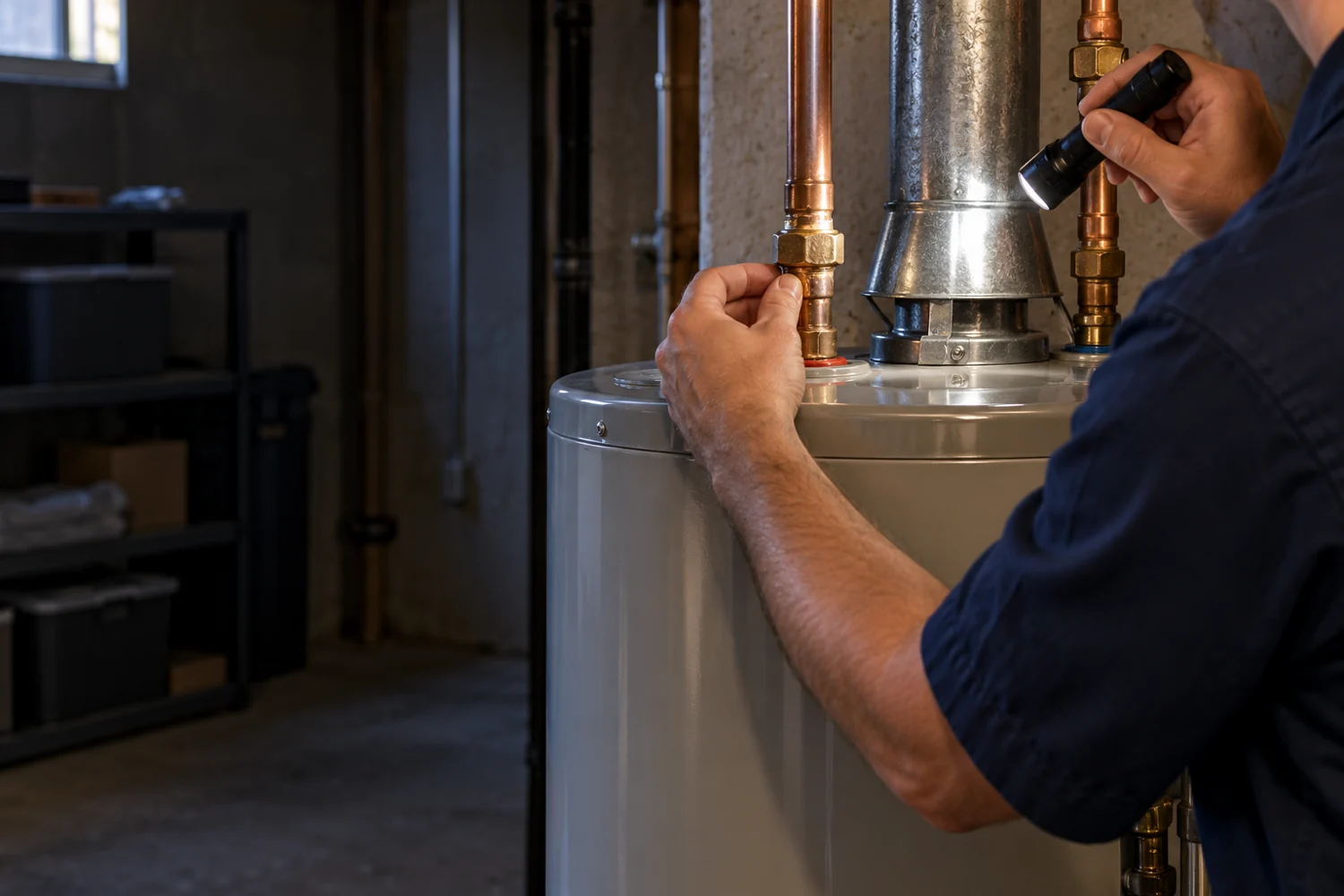
Water below the heater does not tell you where it began. Start with a source-focused assessment before choosing a repair or replacement.
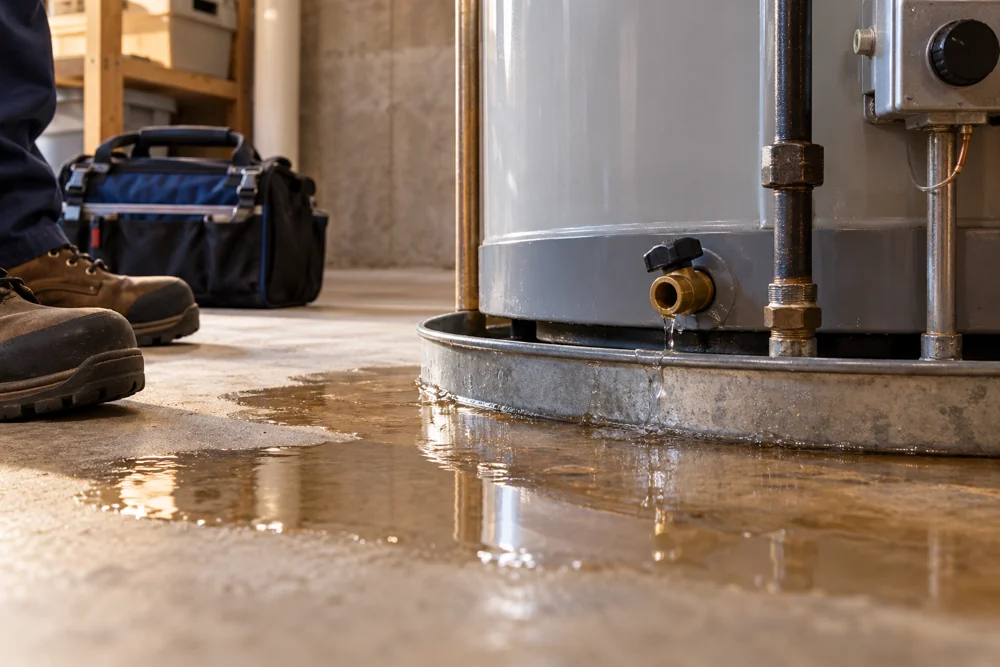
A puddle is a starting point, not a diagnosis.
The timing can help narrow the cause.
Discuss the source before approving work.
Water heater leak detection is an assessment that traces unwanted water to its source and distinguishes a leaking component from relief-valve discharge, condensation or a leaking tank. The useful result is an explanation of what was found, what remains uncertain and which work is recommended.
Gas odor changes the priority. Leave the building and call 911 from outside. If NIPSCO is your gas supplier, also call 1-800-634-3524. Follow its gas-emergency guidance before arranging a routine visit.
Keep clear of water near electrical equipment and hot relief discharge. Do not remove electrical covers or cap a relief pipe. Request model-specific advice about safe shutdown.
A recurring puddle can make replacement feel inevitable. Start by identifying where the water comes from, then consider whether a fitting repair, valve replacement or new heater is needed.
Start with the wet spot, the timing and the equipment. You do not need to know a part name or buy a new heater before requesting help.
A valve, fitting and tank are different repair decisions. The assessment should explain which one is responsible and what evidence supports that conclusion.
Know what the diagnostic visit includes, what might need further investigation and when additional charges would apply. Keep authorization in your hands.
Share your Kokomo address, equipment type and access restrictions at the start. Those details help the provider confirm whether the requested visit is a fit.
Not sure which service to request? Explain what you see. A wet pan, a dripping discharge pipe and a damp wall deserve different questions.
Discuss Your Leak ↗The goal is a useful finding and a sensible next step. Confirm these points with the provider when you arrange the visit.
You do not have to wait for a flooded room. An unexplained wet patch is enough reason to investigate, particularly when it keeps returning.
Note where it first reappears and whether it follows hot-water use. Repeated mopping removes the evidence for a while; it does not explain the source.
Water can arrive from a connection above or behind the heater. Nearby plumbing and other water sources also need consideration.
Report the exact point you can see from a dry, accessible position. A stain or deposit is useful history, but fresh moisture helps establish an active problem.
Record the timing rather than assuming the valve alone has failed. The assessment may need to distinguish valve leakage from pressure-related discharge.
Tell the provider whether the pan is wet and whether water is spreading beyond it. An alarm identifies moisture at the sensor, not the failed component.
Give the date and describe what work was done. A recent installation, draining or connection change is relevant to the investigation, without proving who or what caused it.
Describe the location without taking anything apart. These clues guide an assessment; they do not establish the failed part on their own.
| Where water appears | What needs distinguishing | Useful detail for your call |
|---|---|---|
| Water around the top | Inlet and outlet connections, nearby piping and water tracking down the jacket. | Which connection first becomes wet; whether work was done recently. |
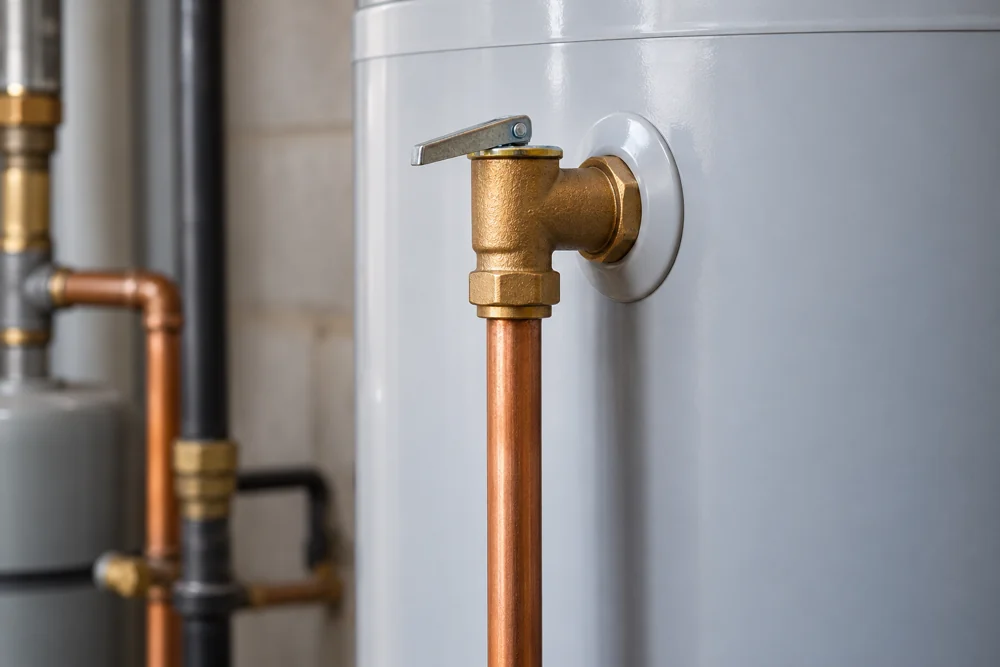
| Drips from the relief pipe | Temperature and pressure relief (T&P) discharge, valve condition and possible pressure or thermal-expansion issues. | Whether dripping follows a heating cycle; whether the discharge is hot. |
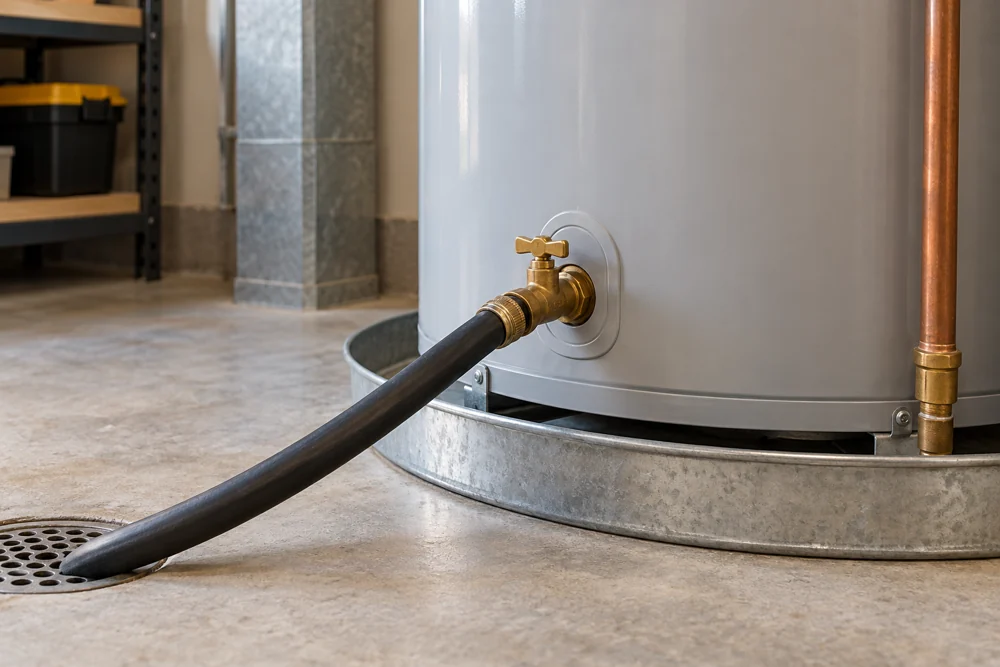
| Water near the drain valve | The valve, its connection and water arriving from elsewhere. | Whether the problem started after flushing or draining. |
| Moisture by an electric access cover | The source near the element area, including a possible gasket leak, assessed with electrical safety precautions. | Which cover is wet. Leave covers and wiring undisturbed. |
| A wet drain pan or puddle at the base | A leak from above, condensation, nearby water or a tank failure. | The first wet spot, how fast water spreads and when it returns. |
| Dripping at a tankless unit | Water connections and model-specific components; condensate drainage where the model has it. | Model number, visible drip location and any displayed error code. |
A drain pan can collect water from more than one source. A pan or water alarm helps reveal moisture; neither establishes the cause. See A. O. Smith’s leak-source guidance.
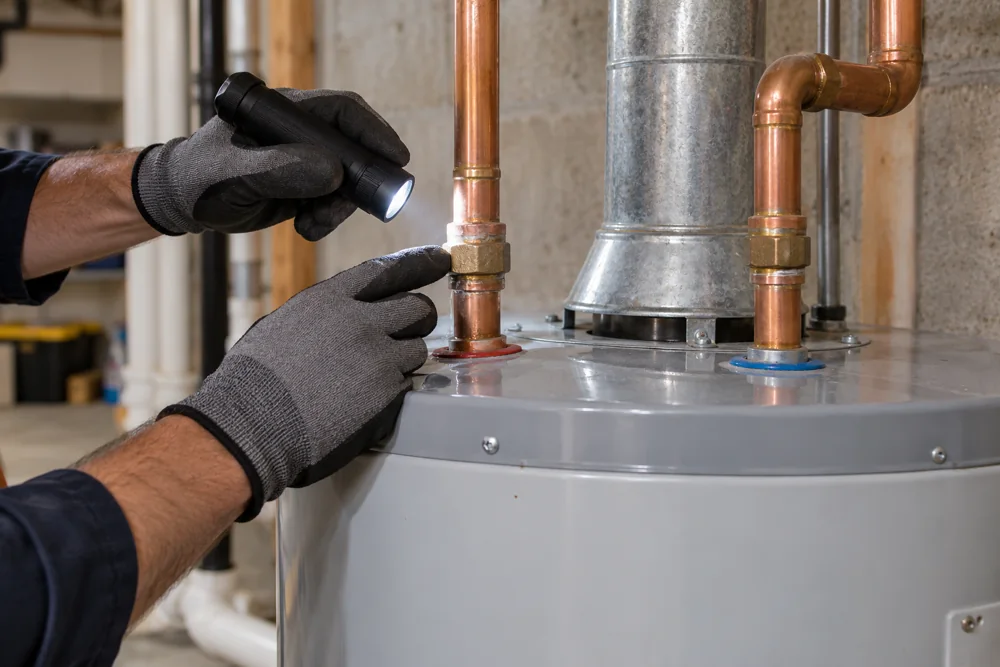
A fitting or valve may need attention even when water ends up under the heater. Condensation can also look like leakage. The decision should follow the identified source and equipment condition.
Ask the provider to show you where the water begins, explain the evidence and identify anything the visit could not confirm. A confirmed leak through the storage tank calls for replacement rather than a patch.
Ask what tools the provider proposes and what they can establish for your particular problem. Do not assume a camera, hidden-pipe investigation or wall opening is included in a water heater assessment.
Manufacturer references: Rheem: warning signs · A. O. Smith: condensation
Location is one clue. The timing, equipment and point of release help explain what is happening.
Cool surfaces can collect moisture when surrounding air reaches its dew point. Gas-heater condensation can also occur under particular operating conditions. That possibility needs distinguishing from a leaking joint or tank; it is not a reason to dismiss recurring water.
Water leaving the discharge pipe is different from seepage around the valve’s threaded connection. A T&P valve is a safety device. Its condition and the cause of discharge both matter, particularly when dripping follows heating cycles.
Report new-installation leaks promptly and keep the original paperwork. Water connections, fittings and electric-element areas can be sources. An on-site finding should guide the next step rather than the assumption that every wet new heater has a defective tank.
A heat-pump heater or a condensing tankless model may have condensate drainage. Identify the model and where the water appears so the assessment can distinguish that drainage system from a domestic-water connection leak.
Technical background: condensation · relief-valve leak patterns · new electric-heater water leaks · heat-pump condensate checks.
Confirm the scope when booking. These are useful points to discuss with the provider handling your visit.
Explain when the leak started, whether hot water changed and any recent installation or maintenance. Share the heater type and an accessible model-label photo. Mention a basement, narrow closet or stairs before arrival.
Ask for accessible connections, valves and surrounding surfaces to be considered before blaming the tank. If the source is hidden or dry during the visit, clarify what additional investigation is proposed.
Repeated relief-valve dripping can require pressure and thermal-expansion checks. Ask whether the assessment will address the reason for discharge as well as the condition of the valve.
Request a clear finding, recommended work and written price before authorizing repairs. If the fault is intermittent, ask what was ruled out, what remains uncertain and how follow-up would be charged.
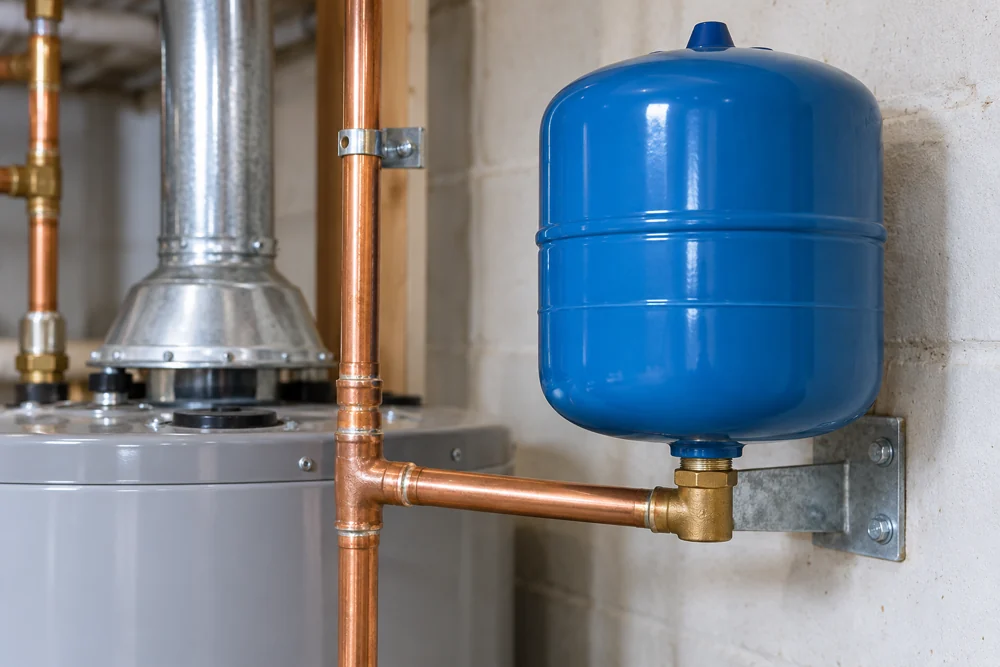
For heating-cycle discharge, see A. O. Smith’s explanation of thermal expansion. Replacing a valve alone may leave a pressure-related cause unresolved.
The next step depends on the finding. Diagnosis and repair can be separate parts of the visit, so confirm both the scope and charges.
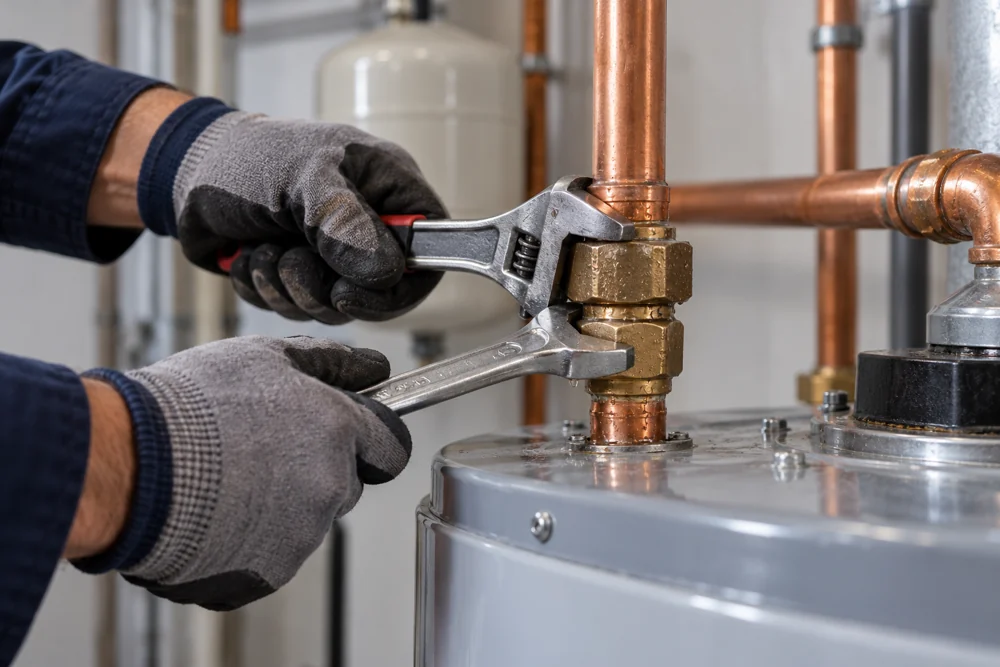
If an accessible connection or replaceable part is responsible, ask what needs replacing and how the repair will be checked afterward.
Water heater pipe leak repair →Ask whether supply pressure, thermal expansion or valve condition is involved. Get an explanation of why the proposed correction fits the finding.
Pressure relief valve service →Discuss equipment sizing, removal, access and required connection changes. Compare the complete replacement proposal rather than the unit price alone.
Water heater replacement →Each job began with unexplained moisture. These cases follow the symptom, the identified source and the repair decision that followed the finding.
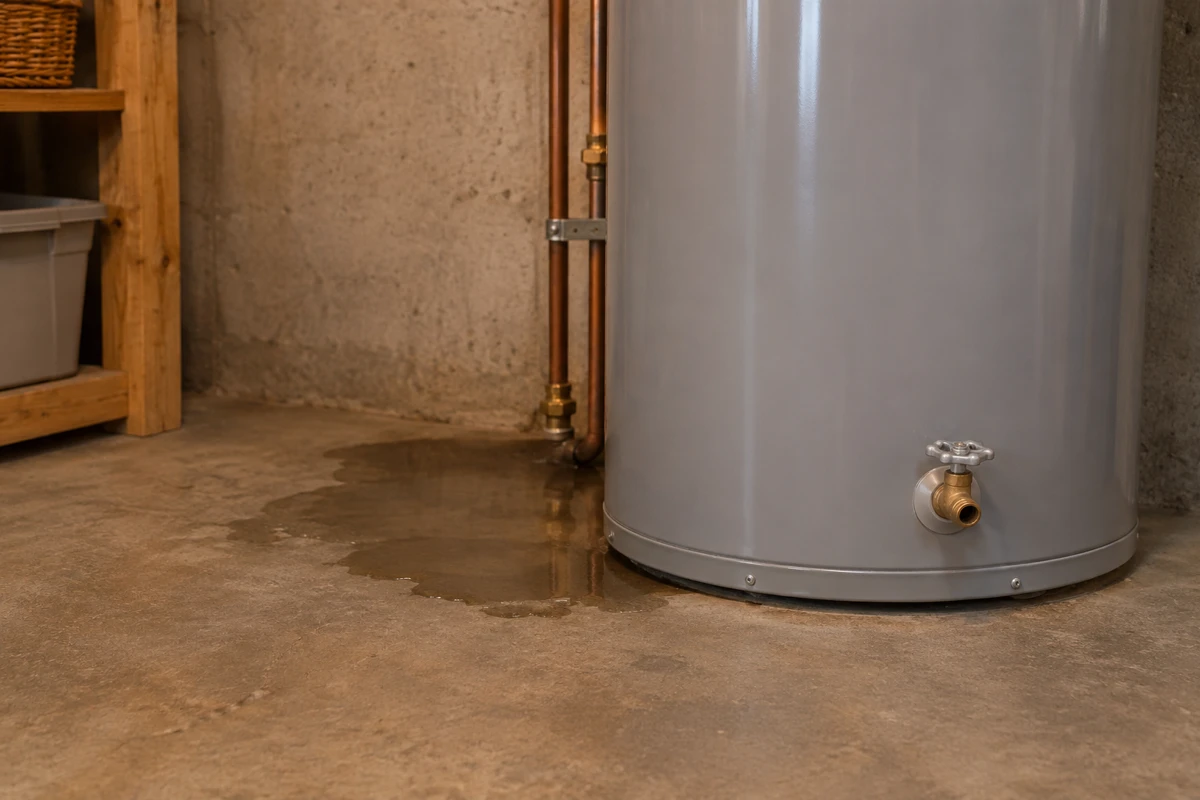
The floor needed repeated mopping, although the heater’s exterior appeared dry. The puddle showed where water collected, but not which component was releasing it.
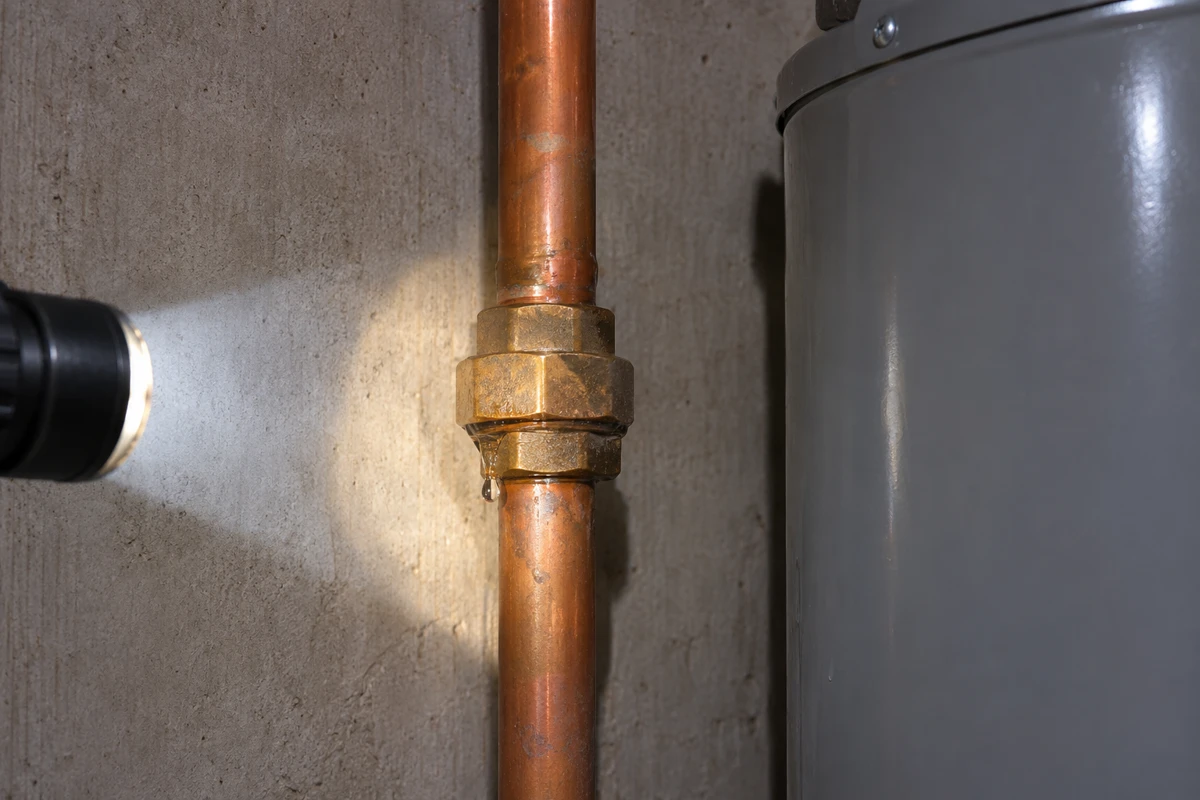
Testing located a leaking fitting behind the tank. That finding led to repair of the connection rather than replacement of the heater. The floor dried and a water-leak sensor was added.
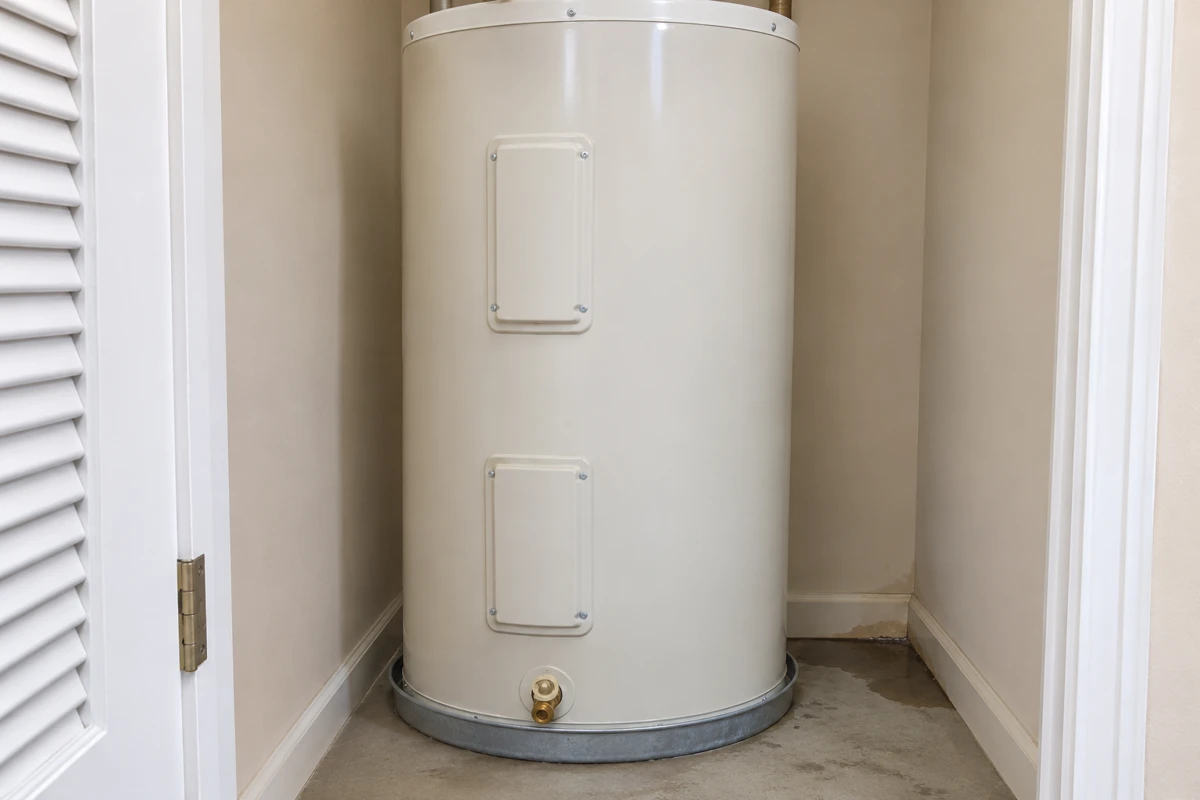
Water kept returning near the heater over several weeks. A look at the front of the dry-looking tank had not explained the recurring floor moisture.
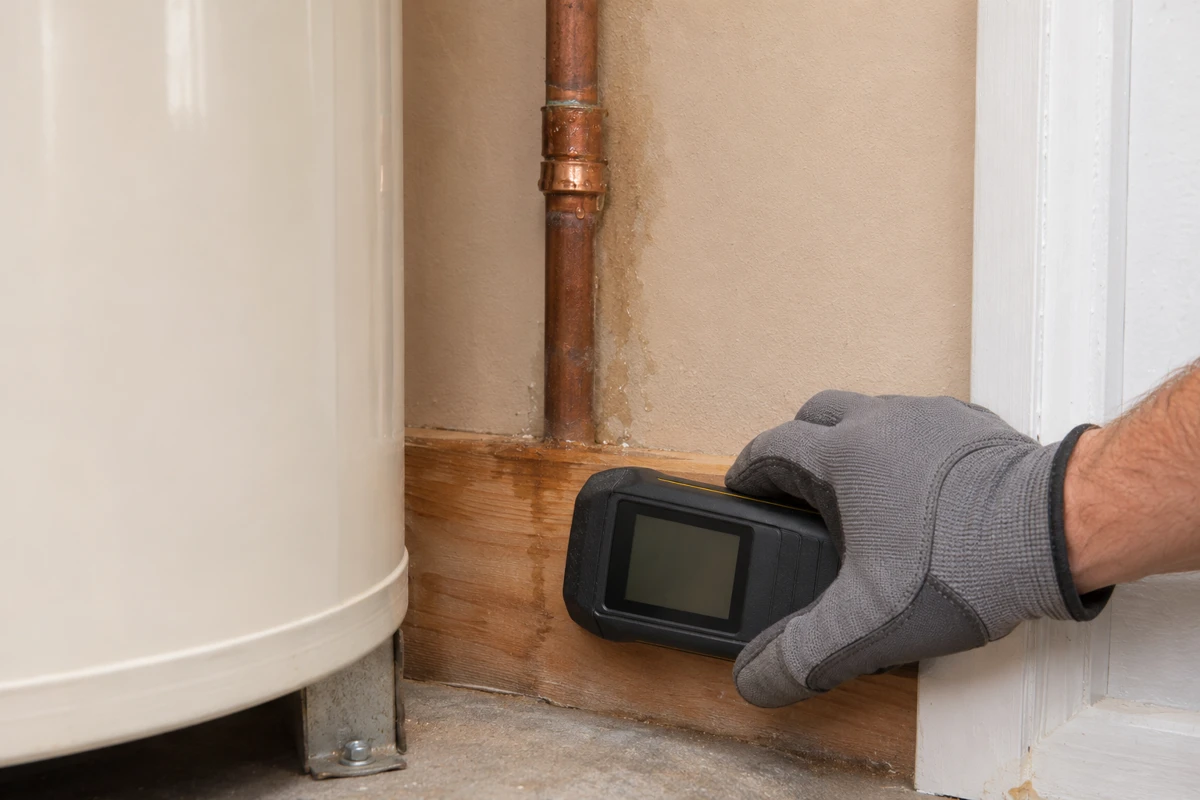
Moisture testing led to a fitting behind the heater. Identifying that individual connection narrowed the repair to the source; repairing it stopped the recurring floor moisture.
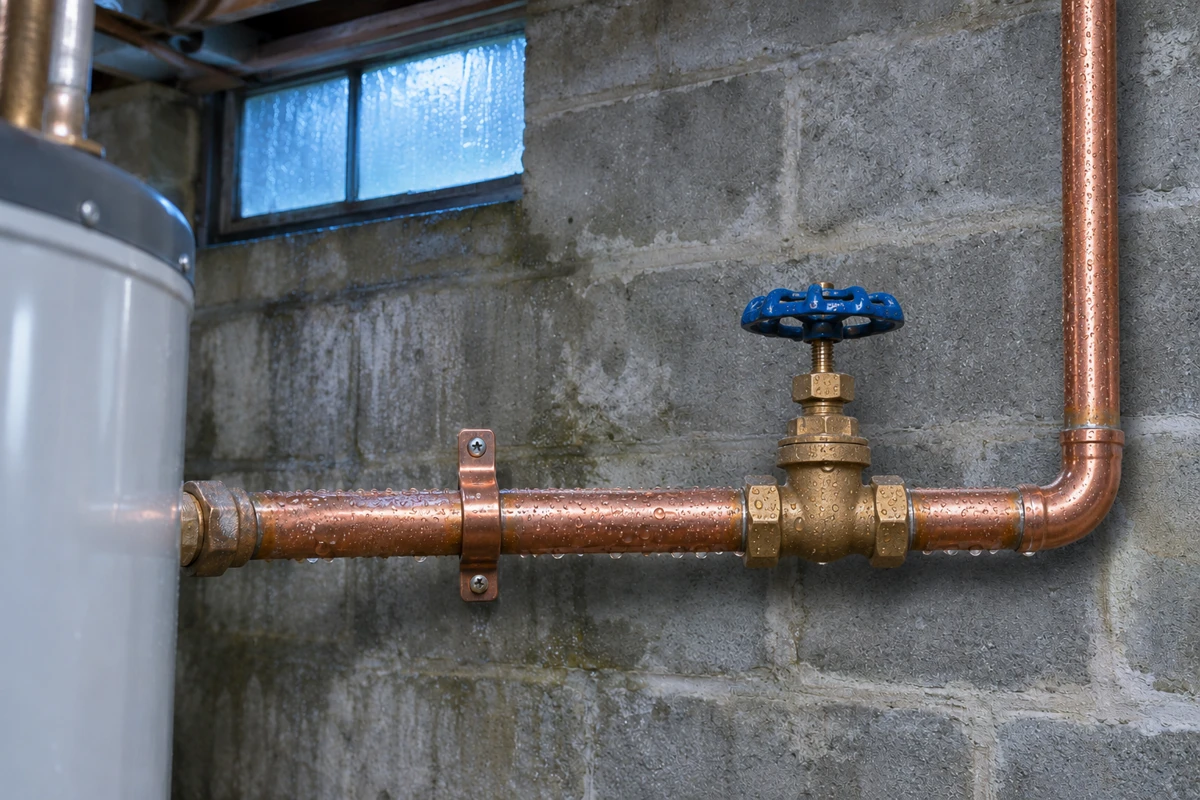
Cold-water pipes stayed wet through summer in a damp basement. The homeowner suspected the pipes, but the broad surface moisture did not identify the active leaking point.
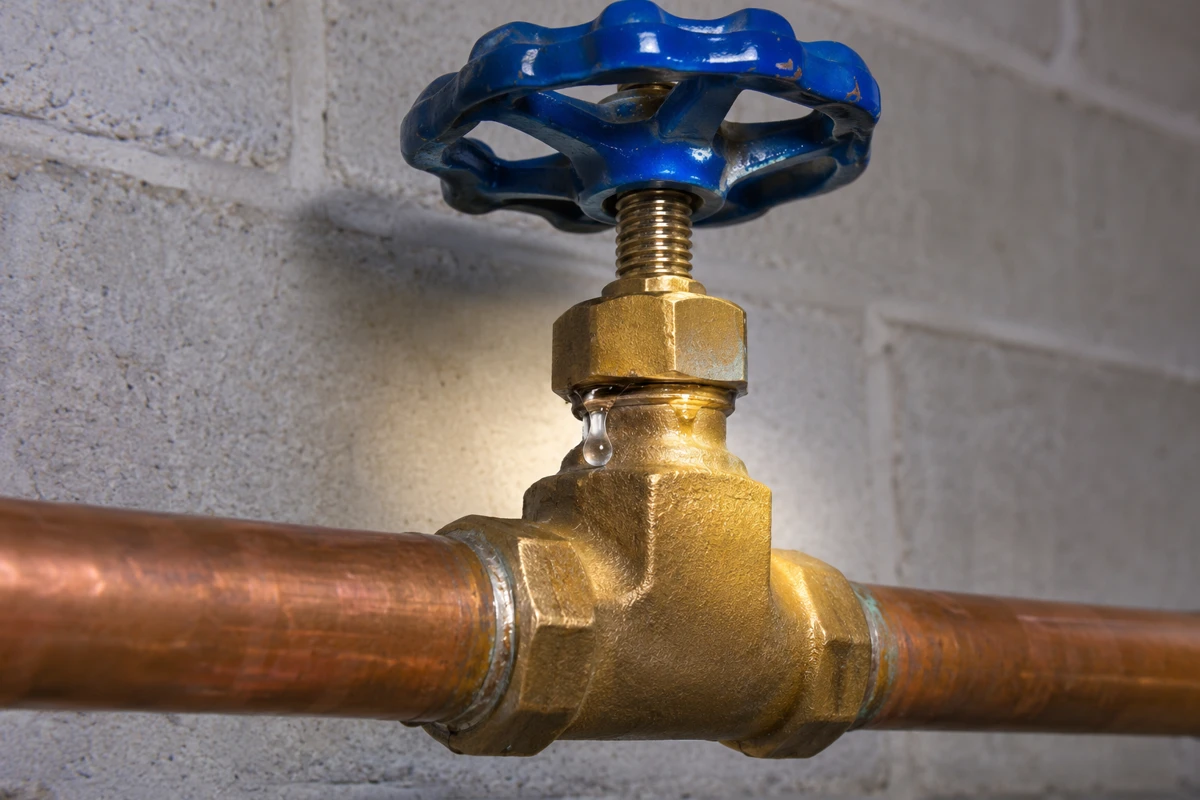
The pipes were found to be sound. The active leak was traced to a valve stem and corrected there. The diagnosis separated wet pipe surfaces from the component actually releasing water.
Seeing a similar problem? Describe the leak location and timing when you call. Your own repair decision depends on the findings at your property.
Request a Leak Check ↗The model matters. Tell the provider which type you have and confirm they handle that equipment before booking.
Report water location separately from any gas odor, ignition issue or vent concern. A water leak assessment does not establish that the gas system is safe.
Gas water heater repair →Describe moisture near access covers without opening them. Element-area leaks require appropriate electrical precautions and assessment of the actual source.
Electric water heater repair →Provide the model and error code, if shown. Report whether the drip is at a water connection or a drain on a model designed to produce condensate.
Tankless water heater repair →Give the full service address, not just the neighborhood. The provider can then confirm coverage, equipment capability and an available appointment.
For a Kokomo basement, describe whether moisture appeared after heavy rain or while nearby appliances were running. For a heater in a garage or tight closet, mention the layout and any recent cold-weather plumbing trouble. Those details help distinguish the heater from another source; the weather alone does not diagnose a leak.
Give the street address when asking about coverage in these Kokomo neighborhoods:
Before booking, ask what the visit covers, whether diagnostic time has a limit and whether repair work is quoted separately. Clarify any additional investigation or return-visit charges. Confirm the name of the company carrying out the work and its payment and warranty terms.
A repair and an early-warning plan do different jobs. Discuss both once the active fault has been addressed.
Save the diagnosis, repair invoice and any photographs that explain the location. If water returns, that history helps distinguish a repeat at the same point from a different leak.
Ask what was checked after the repair and which symptoms should prompt another call. Keep access to the heater, water shutoff and service labels clear.
Discuss maintenance against the actual model instructions and service history. Flushing or descaling is not a substitute for identifying an active leak.
Practical answers about photos, intermittent leaks, access and repair charges.
Yes. A leaking upper connection can leave a trail down the outside and collect beneath the heater. That is why the inspection needs to follow the moisture back toward its origin rather than judge the tank from the floor alone.
Tell the provider when it happens: during a heating cycle, after showers, overnight or only occasionally. Photos taken from a safe, dry position can preserve useful clues. Ask how an intermittent leak will be investigated and whether a return visit could involve another fee.
A water alarm reports moisture at its sensor. It does not establish which part failed or why. Ask whether the assessment will identify the source, explain the cause where possible and provide a repair recommendation.
That depends on where the suspected source is and what is accessible. Do not assume a water heater assessment includes concealed pipe investigation. Ask for the reason, scope and price before authorizing any wall opening or other invasive work.
A photo can show the layout, a visible drip or an equipment label. It cannot confirm internal tank condition, operating pressure or the safety of continued use. The provider should explain what still needs checking in person.
Do not assume it does. Ask about the visit or diagnostic charge, what it covers, whether any amount is credited toward an approved repair and how additional work is authorized. Get the repair scope and price before proceeding.
Hot water production does not establish that a leaking heater is safe to use. Describe any spreading water, hot discharge or electrical exposure and obtain qualified advice for the specific equipment. Gas odor needs emergency action before a routine appointment.
Yes, ask about assessment of recent installations when requesting service. Have the installation date, installer details and warranty documents ready. The findings may need to be discussed with the original installer or manufacturer; warranty coverage depends on the actual terms.
Ask the provider about intermittent-leak assessment when booking. Explain the timing and preserve any safely taken photos of the first wet spot. A small amount of water can still need further investigation; neither the size of a puddle nor a stain proves the repair will be minor.
The finding should say that clearly and identify what was actually checked. Nearby plumbing, appliances or moisture entering the room may need a different investigation. Confirm any wider leak-detection scope and price before that work starts.
Timing depends on access, whether the fault is active and which checks are needed. Ask for an appointment estimate based on your equipment and symptoms. An intermittent or concealed source may need more investigation; there is no reliable one-hour promise for every leak.
Flushing is maintenance, not a repair for a leaking tank or failed connection. If the drain valve already leaks, or the heater has heavy corrosion or an uncertain maintenance history, discuss assessment before attempting a flush. The correct sequence is to identify the fault and then choose appropriate work.
Yes. Installation connections or a serviceable component can be responsible, even on a recently fitted heater. Report the problem to the installer, keep the paperwork and ask for the source to be demonstrated. The actual finding and warranty terms determine the next step.
A mark alone does not establish an active tank leak. Its location and the source of fresh water need assessment. If a leak through the tank itself is confirmed, replacement is the appropriate discussion; changing an unrelated valve will not repair that tank failure.
Technical references · Checked 1 November 2026. General equipment information; the model instructions and on-site findings govern the work.
A. O. Smith: leak sourcesA. O. Smith: thermal expansionA. O. Smith: condensationRheem: technical bulletinsNIPSCO: gas emergenciesHave your address, heater type and leak location ready. Call to request an assessment and ask about scope, fees and availability.
Call (765) 227-1552LeakRescue Pros provides water heater information and service requests. The provider handling your request confirms coverage, scheduling, pricing and work terms.