WATER HEATER GUIDE
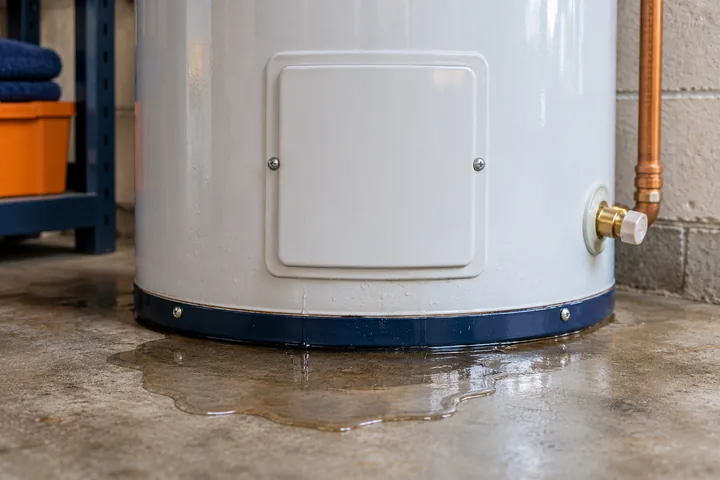
Water Heater Leaking From The Bottom
Water can collect low down after travelling from elsewhere. Ask what finding distinguishes a connection or valve issue from a leaking storage vessel.
Explore This Guide →
Start with safe observations and a clear question. Read our bottom-leak guide, prepare for an assessment of your actual heater, or browse answers in the FAQs.
Begin with safety and what you can observe without disturbing the equipment. Note where water appears, when it started and whether it is spreading. If the source is unclear, request assessment. The leak location is a clue, not proof that a particular part or the storage tank has failed.
General explanations help prepare the conversation. They do not replace property-specific assessment or the actual model’s instructions. References: A. O. Smith on possible water sources and CPSC gas, CO and flood-affected appliance guidance.
Read the guide below to understand water collecting around the bottom of a heater and the questions to ask during assessment.
Water can collect low down after travelling from elsewhere. Ask what finding distinguishes a connection or valve issue from a leaking storage vessel.
Explore This Guide →A symptom helps describe the complaint; the actual source still needs establishing. References: leak-source guidance and relief-valve discharge.
The property and observations help the provider assess the request without a guessed diagnosis.
Answers about guide limits, safe observations and the next service decision.
No. A guide can explain observations, possible causes and useful questions. The actual equipment and water source need property-specific assessment before a diagnosis or repair scope is confirmed.
Start with urgent-leak information and report the current spread and any unsafe approach. Keep clear of wet electrical equipment. Gas odor or a carbon monoxide alarm means leaving immediately and calling 911 and the gas utility from outside.
No. Water may travel before collecting low down. Ask what finding distinguishes a connection or component problem from a leaking storage vessel.
No. Describe observations already made safely. Do not open panels, disturb connections or change controls to reproduce the problem or obtain a photo.
The attending company prices the assessed equipment and defined work. Compare the finding, included tasks, total and exclusions, and ask how added findings will be approved.
No. Ask the insurer, plan provider, manufacturer or company responsible for the work about the actual policy, contract or equipment terms. Keep relevant records available.
Describe the address, heater type, visible symptoms and access details. Ask about the attending company, coverage, capability, assessment charge and available appointment window.
No. They provide local request information. Give the actual service address to confirm coverage and attendance; a neighborhood page or ZIP does not establish an appointment.
Technical And Safety References · Read the source relevant to the question, then follow the actual model instructions and applicable project requirements.
A. O. Smith: Possible Water SourcesA. O. Smith: Relief-Valve DischargeA. O. Smith: Repair And ReplacementCPSC: CO And Flood-Affected Appliance SafetyCall with the actual address, heater type and what you can safely observe. Ask about assessment, charges, equipment capability and the available appointment window.
Call (765) 227-1552LeakRescue Pros provides water-heater information and service requests. The attending provider confirms coverage, capability, scheduling, pricing and work terms.