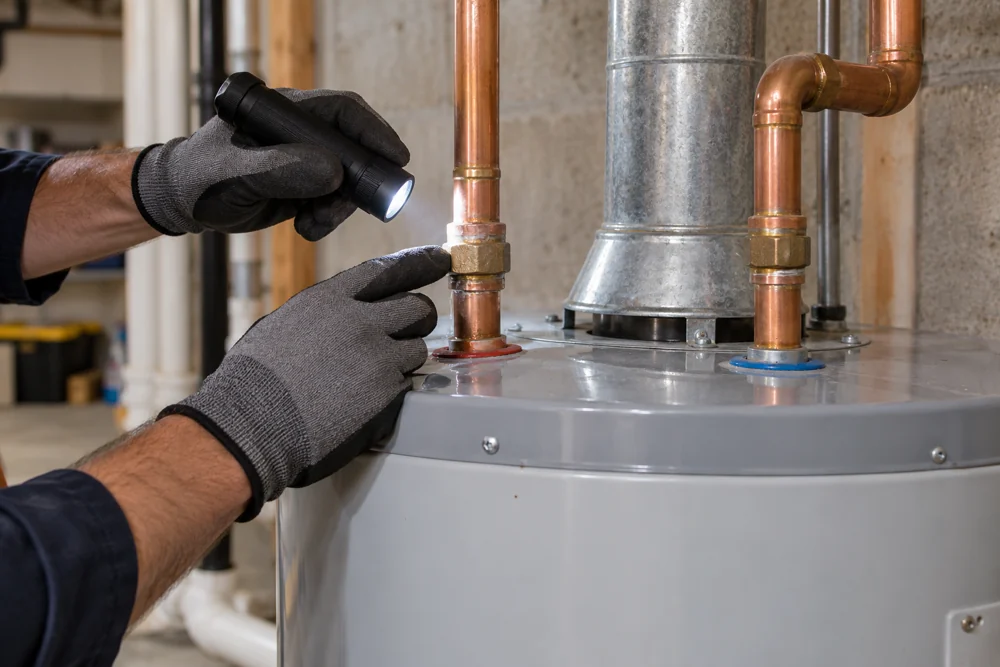
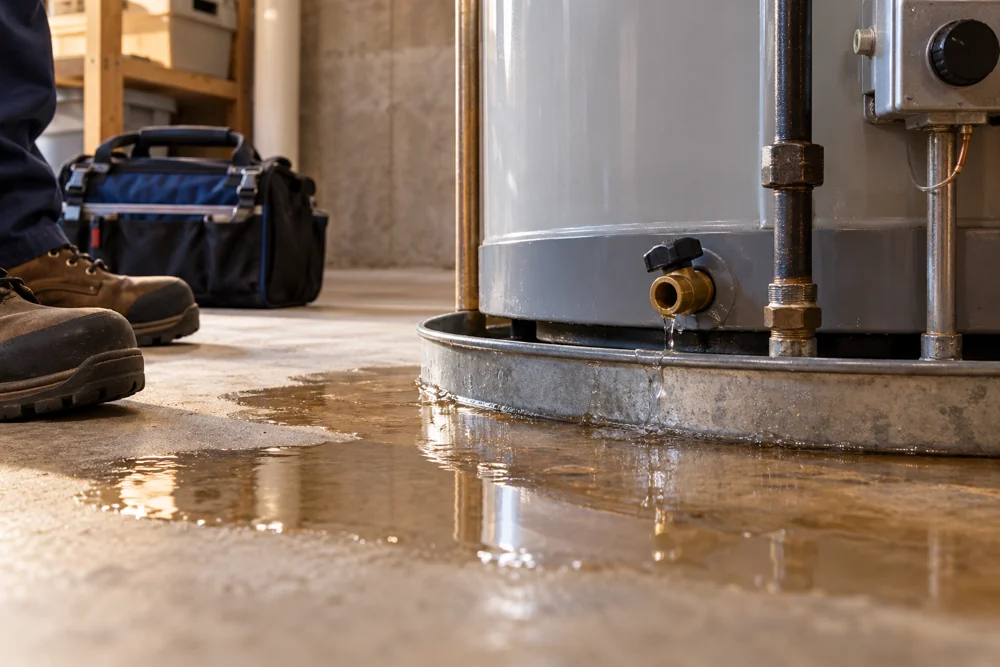
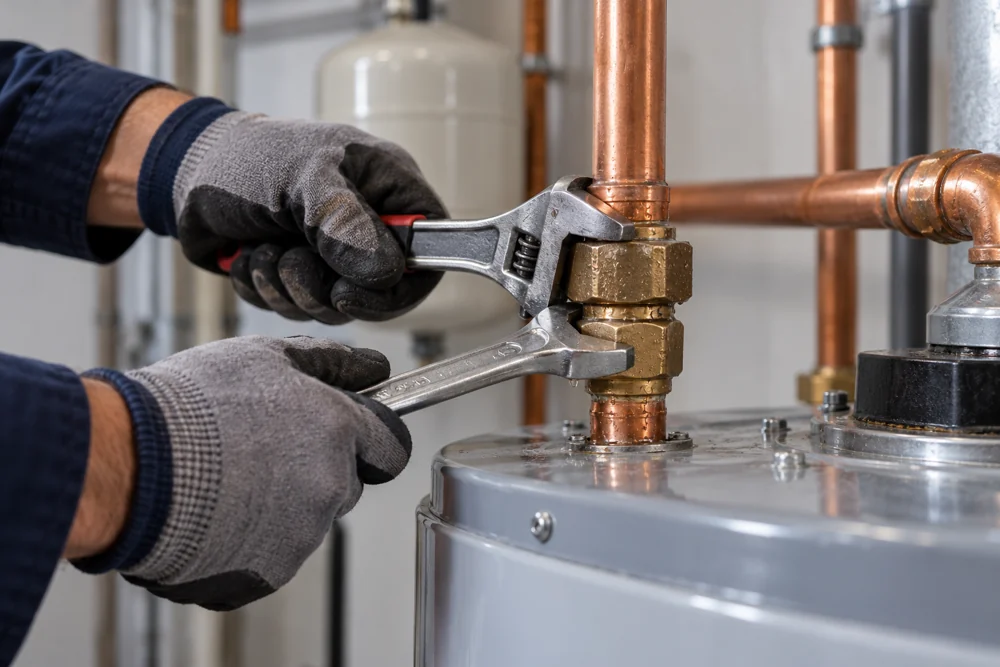
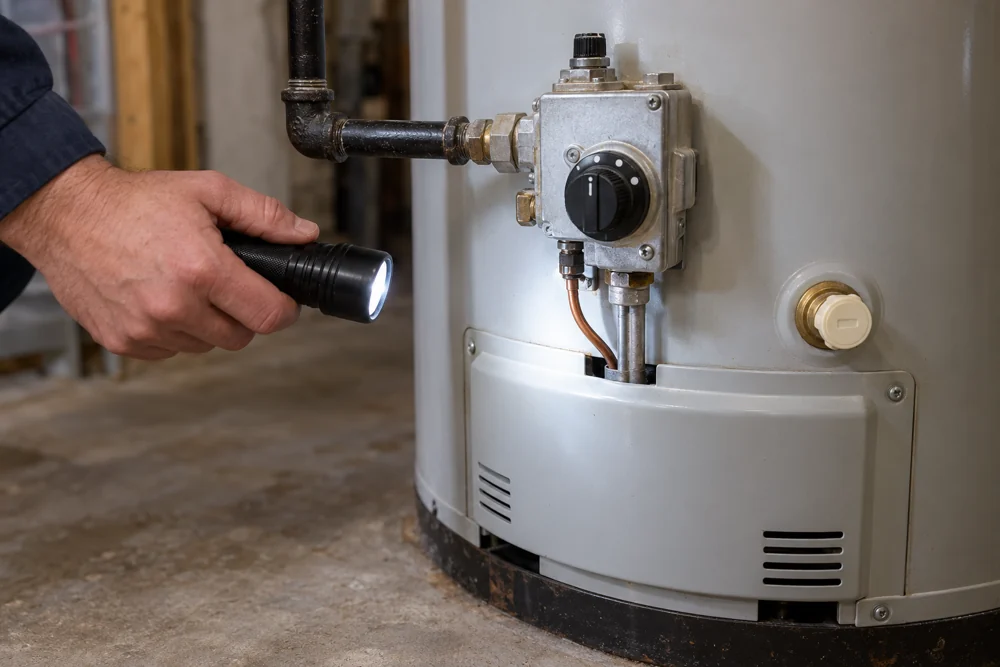
Identify What Is Leaking
Ask for the source, not just a description of the puddle. The finding should support the proposed work.
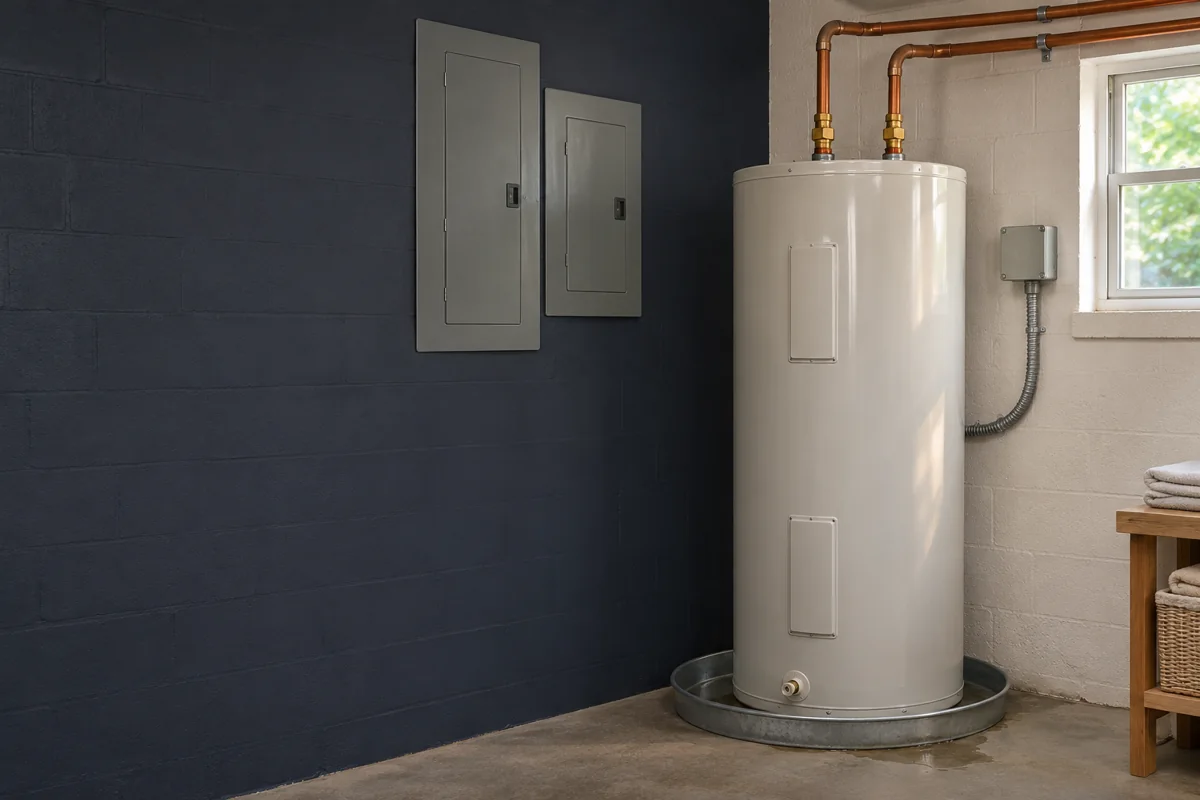
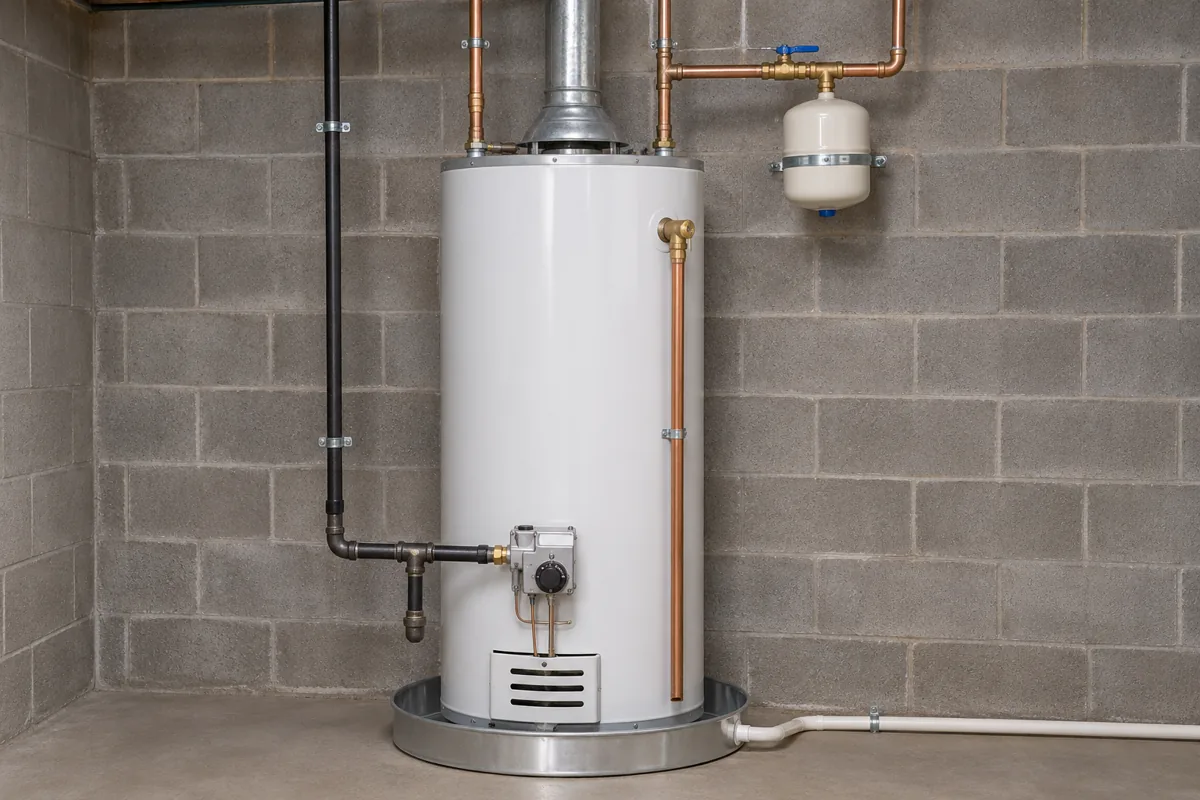
Water in the pan, a wet floor or a drip that keeps coming back? Describe where it collects and request an assessment of where it starts. Get the finding and proposed work clear before choosing a repair or a new heater.
Not by itself. Water can reach the pan from a connection, a valve or the tank. Ask for the actual source to be established before deciding on a repair or replacement. Tell the provider whether the pan is filling, the floor is wet and hot-water delivery has changed.
A drain pan is not a reason to leave a continuing leak unassessed. Report what is visible safely; do not plug a discharge pipe, adjust a hot valve or move the heater to investigate.
Use local references to explain the area, then give the details needed to reach the equipment.
In Fairlawn, the full service address and entrance instructions are more useful than the neighborhood name alone.
Fairlawn is identified on the Kokomo and Howard County Governmental Coordinating Council’s City-Line map. Markland Avenue, Home Avenue, Ohio Street and Defenbaugh Street are useful local street references shown on that mapping.
Inventrek Technology Park is another area reference: Greater Kokomo publishes its address at 700 East Firmin Street, Kokomo, IN 46902. Give your own property address and unit when arranging help.
Explain which door reaches the utility space, where the heater sits and whether the route is restricted. If someone else will provide access, share that arrangement before confirming the visit.
Local references: KHCGCC City-Line mapping and Inventrek’s published location.
A safe observation can help explain the request without opening or adjusting equipment.
| What Is Visible | What To Report | Relevant Service |
|---|---|---|
| Water Inside The Pan | Say whether it appears to be accumulating or reaching the surrounding floor. | Leak Detection → |
| A Water Trail Down The Jacket | Describe the highest wet point you can see safely. | Pipe Leak Assessment → |
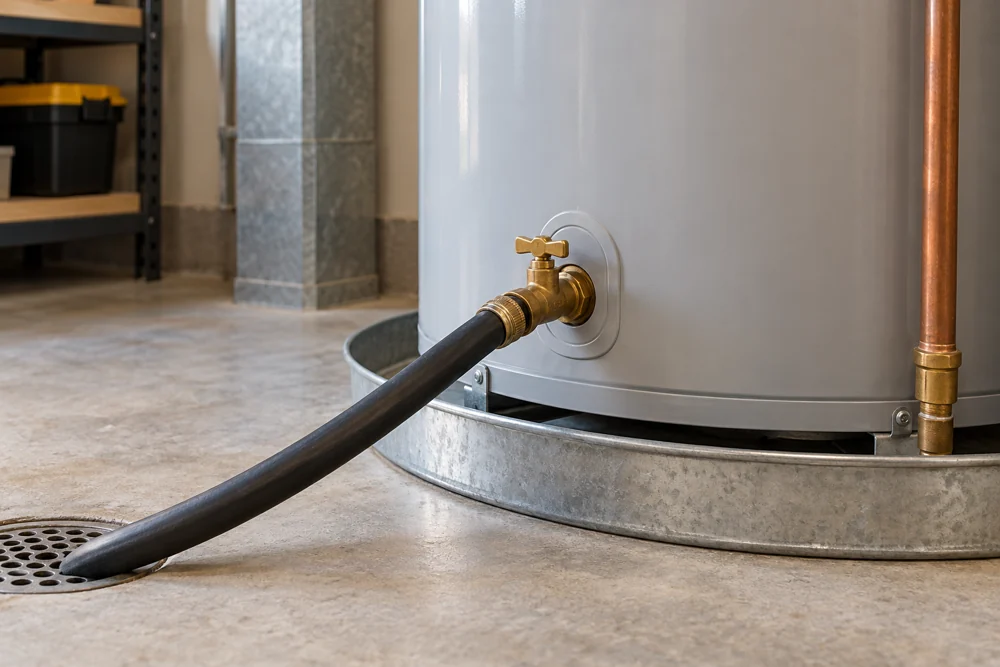
| A Wet Drain Outlet | Report the valve area without opening or turning the drain. | Drain Valve Service → |
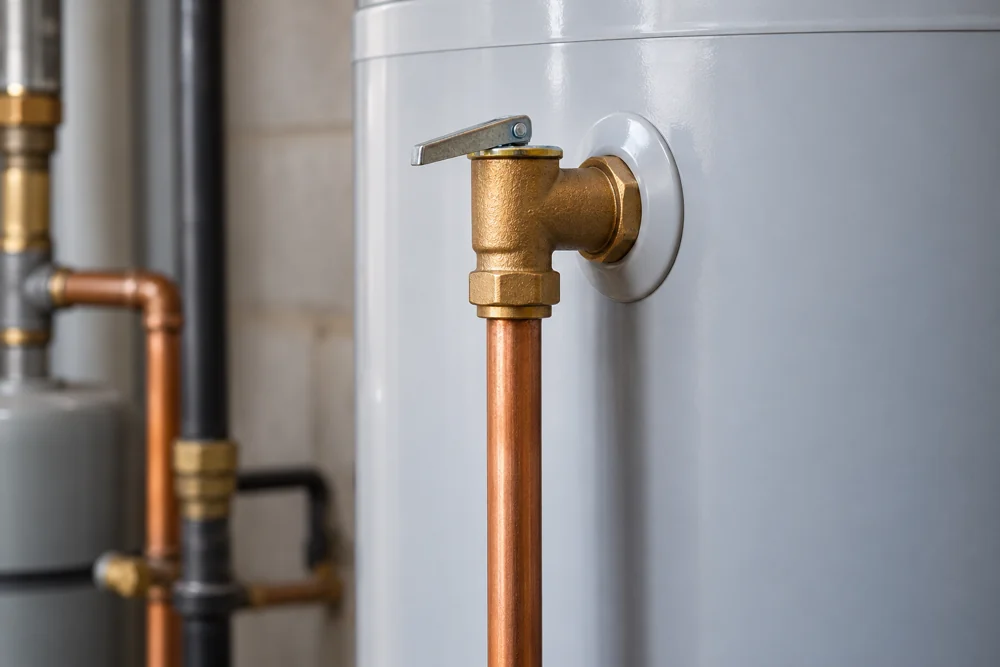
| Relief Discharge | Describe intermittent dripping or continuous flow. Never cap the outlet. | Relief Valve Service → |
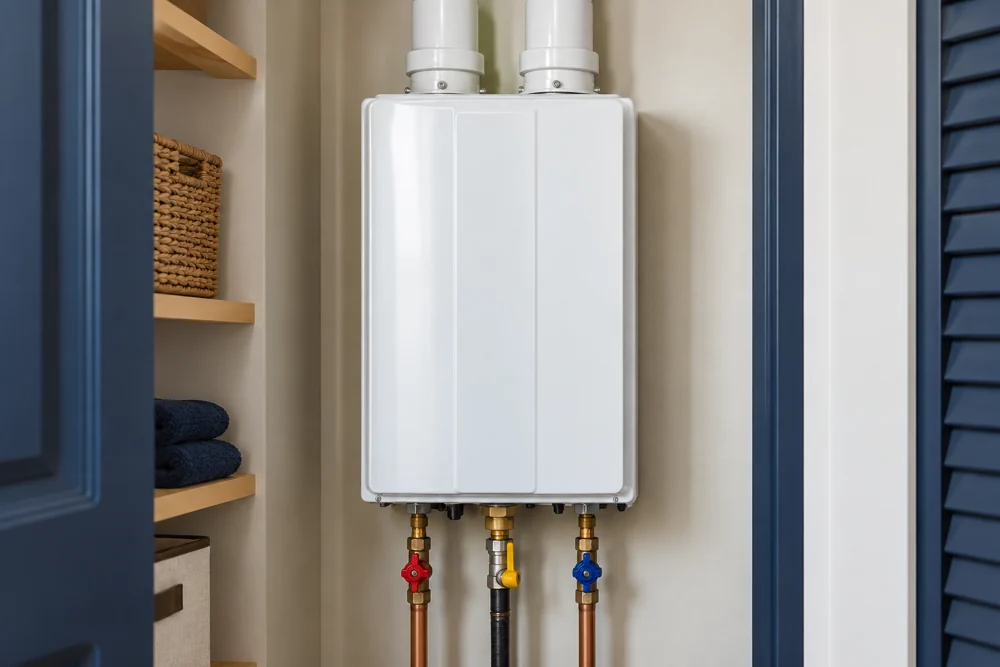
| Water Beneath Tankless Equipment | Give the wet location, visible error and any change to delivery. | Tankless Repair → |
| A Puddle That Keeps Returning | Report when it returns and whether other nearby plumbing also looks wet. | Source Assessment → |
Water may collect away from its source. These observations describe the complaint; they do not establish a diagnosis. Reference: A. O. Smith on water-heater leak sources.
A clear request should lead to a reasoned recommendation and defined terms.
Ask for the source, not just a description of the puddle. The finding should support the proposed work.
Confirm assessment, parts, labor and any related correction. Ask which charges or tasks are excluded.
Describe tight spaces and finished surfaces. Clarify openings, equipment movement and restoration before approval.
Keep the work record and attending company’s details. Ask who handles a returning leak and what terms apply.
Comparing different recommendations? Ask each provider what finding supports the proposal and what its estimate includes.
Discuss Your Leak RequestDescribe what is wet now and what you noticed earlier.
Do not lift the heater, remove a pan connection or enter a wet electrical area to find an answer. Unknown details can be left for the assessment.
The attending provider confirms the appointment and the terms for work at the property.
Give the full address, heater type and where water is visible. Explain whether it is spreading or returning.
Ask about capability, the attending company, assessment charges and the available appointment window.
Discuss the source, proposed correction, price and exclusions. Agree on any access work or revised scope.
Keep the invoice, completed-work details and company contact. Clarify any remaining inspection or return-service arrangements.
Different sources call for different explanations and work scopes.
If the equipment is suitable to retain, ask whether a targeted repair addresses the identified fault.
A relief-valve complaint needs consideration of why discharge occurs. Do not assume changing the valve alone will resolve it.
Relief Valve Assessment →For confirmed tank-body failure, compare equipment selection, removal, connections and completion checks together.
Water Heater Replacement →References: repair and replacement considerations and relief-valve discharge guidance.
A clear record connects the finding, completed work and any later service request.
Ask what is leaking, what will be repaired or replaced and what the total covers. Agree on how another finding will be priced.
Ask which appropriate leak and operating checks were performed, what was installed and whether any follow-up remains.
Contact the attending company with the work record and a clear description of the returning water. Ask about its follow-up process and applicable charges.
Report the actual conditions at the home rather than assuming a cause from the neighborhood.
Mention when it appears and whether a nearby wall or floor is also wet. The heater’s location alone does not establish the source.
Describe unheated areas or piping exposed to freezing conditions. Timing is useful, but it does not confirm a freeze-related fault.
Ask how the selected model fits its supply, service space, venting or drainage requirements. A heat-pump model also needs a suitable room environment.
Do not restart affected appliances. Request assessment by a qualified professional or utility representative before use.
References: ENERGY STAR equipment-location guidance and CPSC guidance on flood-affected appliances.
Price the actual finding and work, with inclusions and exclusions explained.
Clear location, symptoms and authorization details help define the request.
Have these details ready when arranging an assessment.
If a tenant, relative or property manager will provide access, identify who can approve the work and a revised estimate. Share any separate entrance or access restriction while booking.
For installation or building changes, confirm applicable requirements and responsibility with the provider and relevant authority before the work begins.
Kokomo: Department Responsibilities ↗Connect the relevant location information with the service your equipment needs.
Select another neighborhood for its local information. The attending company confirms service coverage and scheduling for the individual property.
Answers about wet pans, leak sources, appointment details and repair decisions.
Yes. Share the exact Kokomo address, heater type and visible symptoms. The attending provider confirms coverage, capability, available appointments and assessment charges.
No. A connection, valve or tank can contribute water to the pan. The actual source should be established before a repair or replacement decision.
Report both observations and whether water appears to be accumulating. A dry floor does not establish that a continuing leak is resolved or harmless. Do not disturb the pan or equipment to investigate.
Describe the connection without adjusting it. A hot or pressurized joint and nearby electrical equipment can present hazards. The provider can assess the source and appropriate repair.
Yes. Water may collect below its source. Report any safely visible water trail, and ask the provider to establish the starting point before recommending equipment replacement.
Report where the discharge appears and whether it is intermittent or continuous. Do not cap or block it. The valve and the conditions causing discharge need assessment.
Requests can be made for these types. Give the fuel, equipment type and model if safely readable; the attending company confirms capability for the actual equipment and problem.
Explain when it was visible, where water collected and whether it returned after use. Do not operate the heater to reproduce the complaint. An intermittent symptom can still be described and assessed.
A local street reference can help orient the request. Give the actual street number, unit and entrance instructions so the provider can confirm coverage and access.
Coordinate the request with the owner or property manager and identify the person authorized to approve paid work. Confirm access and the contact for any revised estimate before booking.
No. Flushing is maintenance and does not repair a failed storage vessel. Ask what finding supports maintenance, a component repair or full equipment replacement.
The finding, equipment, parts, labor, access and related work affect the estimate. Confirm the assessment charge and request the total for the defined scope before approving repairs.
No fixed arrival or completion time is guaranteed here. The provider confirms its appointment window, parts, equipment capability and required work. Mention active water spread or loss of hot water when making the request.
Keep the attending company’s contact, invoice, finding, work scope and relevant warranty or labor terms. Ask which checks were performed and how to report a returning leak or delivery problem.
Local And Technical References · Geographic records provide location context. Equipment work follows the actual model’s instructions and applicable project requirements.
KHCGCC: Fairlawn And City-Line MappingGreater Kokomo: Inventrek LocationA. O. Smith: Leak LocationsA. O. Smith: Relief-Valve DischargeA. O. Smith: Repair And ReplacementWhirlpool: Relief Outlet SafetyKokomo: Department ResponsibilitiesCall with the address, heater type and the water you can observe safely. Ask about assessment, charges, provider availability and the next step for the property.
Call (765) 227-1552LeakRescue Pros provides water-heater information and service requests. The attending provider confirms coverage, capability, scheduling, pricing and work terms.